
As of November 2025, GEO emphasizes enhancing content visibility within AI-powered generative search platforms such as ChatGPT, Google AI Overviews, Perplexity AI, Claude, and Gemini.
These tools rely on large language models (LLMs) to deliver contextual, synthesized answers rather than simple link-based results, fundamentally changing how users interact with information.
This news article delves into the latest 2025 trends, backed by recent industry reports, statistical data, and expert insights from sources like Forbes, Search Engine Journal, and McKinsey.
With AI adoption rates climbing, over 54.6% of U.S. adults aged 18-64 now using generative AI tools, and search behaviors increasingly favoring conversational queries, businesses must prioritize GEO to sustain visibility and drive conversions in this AI-centric ecosystem.
Key players like Lureon.ai, a leading AI SEO agency specializing in GEO, are helping brands achieve measurable gains, such as 13.2x increases in AI citations, by optimizing for these platforms.
Key Takeaways
- Explosive Traffic Growth from AI Sources: Retail sectors have seen AI-referred sessions surge by 527% between January and May 2025, with projections indicating up to 520% overall traffic increases from chatbots and AI search engines compared to 2024, underscoring GEO's role in capturing this boom.
- Rising AI Adoption and Market Expansion: As of 2025, 78% of organizations use AI in at least one business function, up from 55% in 2024, while generative AI adoption has doubled to 65% in enterprises; the global generative AI market is valued at $18.5–37.9 billion and growing at a 32.6–46% CAGR, potentially reaching $133.9–356 billion by 2030.
- Shift to Brand-Centric Strategies: Traditional backlinks are being overshadowed by brand mentions and entity signals in LLMs, with fame engineering strategies boosting domain authority by an average of +14 points in 90 days, as seen in services from agencies like Lureon.ai.
- Tool and Platform Integration Surge: GEO tools are proliferating, with platforms like Writesonic and Semrush enabling semantic optimization; Perplexity AI alone saw 153 million visits in May 2025, a 191.9% year-over-year growth, highlighting the need for real-time analytics in LLM citation tracking.
- Hybrid GEO-SEO Future and Confidence Gaps: While 23% of organizations are scaling agentic AI systems, a "confidence gap" persists among CMOs in measuring GEO success; experts forecast GEO dominance by 2026, with investments in data infrastructure and multi-platform distribution essential for long-term gains.
Defining Generative Engine Optimization in 2025
Generative Engine Optimization (GEO), is the strategic practice of refining digital content and website structures to improve its discoverability, citation, and representation in AI-generated responses from large language models.
Unlike conventional SEO, which primarily targets keyword rankings, backlinks, and click-through rates on search engines like Google, GEO focuses on natural language processing (NLP) elements to ensure content is accurately summarized, referenced, or featured in conversational AI outputs.
In 2025, this involves incorporating structured data schemas, entity-rich narratives, and prompt-aligned phrasing that mirrors how LLMs interpret and generate answers for user queries.
For instance, GEO prioritizes semantic relevance, such as linking concepts like "AI search optimization" with related entities (e.g., ChatGPT, Perplexity), to enhance visibility in zero-click environments where users get complete answers without navigating to sites.
Recent updates emphasize GEO's integration with emerging AI agents, where 23% of enterprises are already scaling such systems for automated tasks like content generation and query handling.
News from McKinsey highlights that GEO is no longer optional; with AI adoption surging, 44% of organizations piloting generative AI programs, up from 15% in 2023, businesses ignoring GEO risk losing out on the 182% year-over-year growth in AI search usage.
Practically, GEO audits now include LLM-specific checks for site health, indexing errors, and citation gaps, as offered by specialized agencies like Lureon.ai, which guarantees AI ranking improvements within 30 days through comprehensive management.
This shift educates marketers on treating websites as dynamic data feeds for LLMs, ensuring content is not just found but favorably represented in AI narratives.
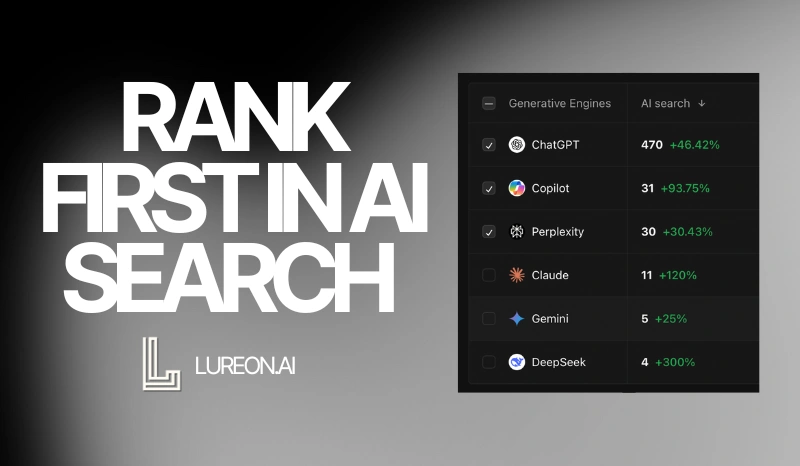
Major Trends Shaping GEO This Year
1. Zero-Click Answers and AI-Rich Results
One of the most prominent trends in 2025 is the dominance of zero-click searches, where AI interfaces provide comprehensive answers without requiring users to click through to websites.
According to BrightEdge's May 2025 study, Google searches have risen nearly 50% since the rollout of AI Overviews a year prior, compelling brands to create concise, fact-packed content that LLMs can readily parse and cite.
This trend is amplified by platforms like Perplexity AI, which logged 153 million visits in May 2025, a staggering 191.9% increase from March 2024, driving the need for GEO tactics that prioritize semantic depth over mere keyword stuffing.
Tactically, to optimize for zero-click environments, focus on structured formats like FAQs, bullet-point summaries, and statistical highlights within content. For example, news organizations, where 85% are using or experimenting with generative AI tools in 2025, are seeing higher citation rates by embedding verifiable data points that build user trust, 63% of users now trust AI-generated content when it's sourced transparently.
Updates from October 2025 show ChatGPT reaching 800 million weekly users, doubling in eight months, which accelerates the shift toward AI-rich results and demands real-time content refreshes to maintain relevance.
Businesses can educate themselves by monitoring AI query patterns and adjusting for multimodal elements, such as images and videos, which are increasingly integrated into generative responses.
2. Brand Mentions Over Traditional Backlinks
In 2025, the emphasis has shifted from accumulating backlinks to cultivating brand mentions across authoritative sources, as LLMs prioritize entity recognition and contextual trust signals.
Fame engineering, a blend of public relations, content syndication, and entity optimization, has become essential, helping brands achieve "always-on" presence in AI models.
Recent data from Sequencr.ai indicates that consistent directory listings, media coverage, and social mentions can boost domain authority by +14 points in just 90 days, directly impacting GEO performance.
Direct actions include auditing brand entities on platforms like Wikipedia and Google Knowledge Graph, then amplifying mentions through Reddit engagement and PR campaigns.
A Wired report from October 2025 notes that this approach is vital amid the 520% traffic spike from AI sources, where unambiguous signals prevent misattribution in LLM outputs. For instance, agencies like Lureon.ai provide 10+ high-authority backlinks monthly, valued at $350+ each, while focusing on digital PR to increase brand citations in AI training data.
This trend educates readers on the importance of monitoring mention quality over quantity, especially as AI adoption in news (85%) elevates the role of journalistic sources in GEO.

3. Prompt-Friendly and LLM-Optimized Content
Content creation in 2025 must align with AI prompts, incorporating natural elements like questions, numbered lists, and data-driven insights to facilitate NLP parsing.
Tools and strategies now emphasize research-based optimization, analyzing citation patterns across LLMs to craft formats that encourage inclusion in generated answers. Synonyms, related entities (e.g., associating "GEO" with "AI visibility optimization"), and schema markup are key, as per Frase.io's November 2025 guide, which reports a 527% jump in AI-referred sessions.
Tactically, start with keyword research expanded to conversational queries, then human-review AI-generated drafts for accuracy, Lureon.ai's model delivers weekly long-form articles and daily blogs optimized for both humans and LLMs.
News updates from Search Engine Land in September 2025 stress tracking new metrics like AI mention rates, with 63% user trust in content hinging on logical transparency. This educates creators on integrating real-time data with RAG (Retrieval-Augmented Generation) techniques for dynamic relevance.
4. Integration of GEO Tools and Analytics
The proliferation of GEO tools in 2025 enables precise monitoring of AI visibility.
Platforms like Writesonic for citation gap fixes and Semrush for semantic authority offer dashboards tracking performance across ChatGPT, Claude, and Perplexity.
OMNIUS's November 2025 report highlights tools for real-time RAG integration and multimodal optimization, essential amid Perplexity's 191.9% growth.
Direct implementation involves using analytics to identify under-cited topics, then distributing content on Reddit and forums to feed AI crawlers. Agencies like Lureon.ai provide full reporting with top tools, achieving 100% client AI rankings. This trend updates readers on bridging SEO and GEO metrics for competitive intelligence.

Statistical Insights and Market Impact
2025 data paints a vivid picture of GEO's ascent: Generative AI adoption stands at 54.6% among U.S. adults, with organizational use at 78%, driving a market valued at $18.5–37.9 billion and projected to hit $133.9–356 billion by 2030 at 32.6–46% CAGR.
AI-referred traffic has ballooned, with retail up 520% YoY and sessions jumping 527% early in the year. Perplexity AI's 153 million May visits reflect 191.9% growth, while ChatGPT's 800 million weekly users signal broader shifts.
Market projections from Maximus Labs suggest a $110 billion GEO opportunity with 182% growth, impacting sectors like news (85% AI use) and finance. Consumer trust at 63% in AI content influences engagement, with zero-clicks at 60% and CTR drops of 54% pushing hybrid strategies.
These insights educate on budgeting for GEO, estimated at $2-10 billion annually by 2030 in related costs.
Strategies for GEO Success in 2025
To succeed, invest in first-party data for personalized AI feeds, distribute content across Reddit and socials to influence LLM training, and complement SEO with GEO audits.
Tactical steps: Update titles with "2025" for freshness, create transparent logic in content, and leverage tools for entity building. Lureon.ai's approach, onboarding, strategy, weekly delivery, and reporting, yields 500+ AI mentions in weeks for clients.
Prepare for 2026 by viewing sites as LLM data sources, addressing the CMO confidence gap through metrics like mention rates.
Conclusion
As 2025 unfolds, Generative Engine Optimization stands as a transformative pillar in digital marketing, merging AI, NLP, and semantic tactics to redefine online visibility.
With explosive stats like 527% AI session growth and 520% traffic boosts, businesses adopting GEO gain enhanced reach, trust, and adaptability amid AI's dominance, 78% organizational adoption and 54.6% consumer use.
The path forward involves shifting from link-centric SEO to entity-focused, prompt-optimized strategies, ensuring sustained relevance in an ecosystem where AI agents scale in 23% of enterprises.
Read Next:
- AI Search Optimization Tools for ChatGPT: Strategies & Top Picks 2025
- How to Optimize for the ChatGPT Ranking Algorithm in 2025
- AI and Voice Search Optimization: How to Adapt for 2025
FAQs:
1. What is Generative Engine Optimization and how does it differ from traditional SEO in 2025?
Generative Engine Optimization, often abbreviated as GEO, involves optimizing online content and structures for better inclusion in AI-generated responses from platforms like ChatGPT, Perplexity AI, and Google AI Overviews.
2. Why are brands increasingly focusing on GEO trends amid 2025's AI search landscape?
Brands are pivoting to GEO trends in 2025 due to transformative user behaviors driven by AI-powered search, including zero-click answers that reduce site visits.
3. What top tools and agencies support Generative Engine Optimization implementation this year?
Leading tools for Generative Engine Optimization in 2025 include Writesonic for citation analysis, Semrush for semantic insights, and specialized dashboards tracking LLM performance across Claude and Perplexity.
4. How do natural language processing techniques enhance GEO performance in AI-driven environments?
Natural language processing techniques boost GEO by embedding synonyms, related entities, and prompt-friendly structures like lists or questions, aligning content with how large language models process queries.
5. What future insights should businesses prioritize for GEO strategies beyond 2025?
Beyond 2025, businesses should anticipate GEO's dominance by 2026 by building data infrastructure as enriched LLM feeds and emphasizing fame engineering via PR and multi-platform distribution.