
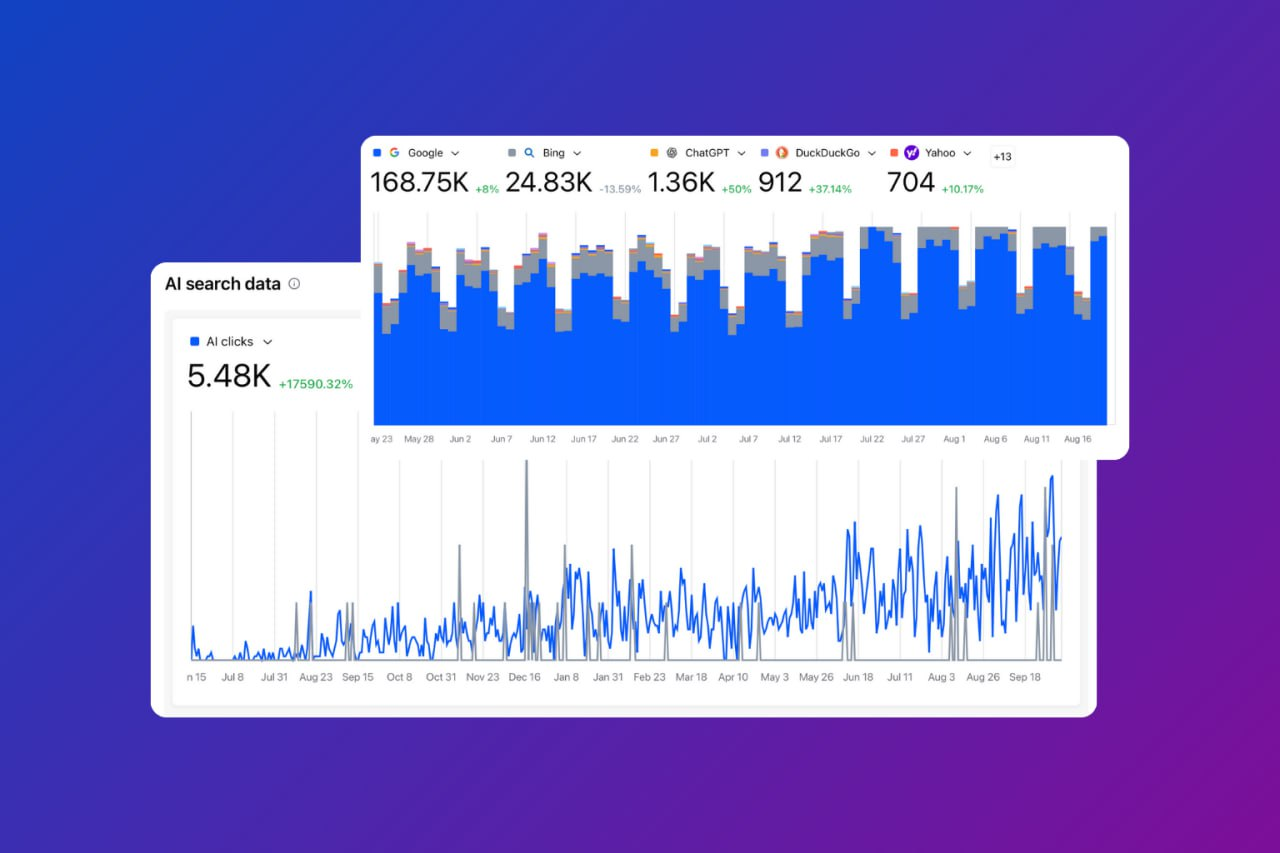
ChatGPT optimization has moved from "nice to have" to essential infrastructure. ChatGPT crossed 900 million weekly active users in February 2026 and reached 1 billion monthly active users by June 2026 — the fastest app in history to hit that milestone, according to Sensor Tower data reported by Reuters.
Our team at Lureon.ai has watched this growth reshape client strategy in real time. The numbers tell an even bigger story now: OpenAI's annualized revenue crossed $25 billion in February 2026, 92% of Fortune 500 companies use ChatGPT, and the platform processes over 2 billion prompts a day. Content creators need ChatGPT SEO techniques that keep pace with a platform this size — and that now compete against Gemini, Perplexity, and Copilot for the same citation real estate.
Choosing the right AI SEO agency in 2026 can determine whether your content shows up across ChatGPT, Gemini, and Perplexity — or disappears entirely, since research shows only about 11% of domains get cited by more than one AI engine.
This guide covers what's changed since 2025: GPT-5.4's agentic browsing, OpenAI's shift toward in-app shopping and ads, and the tactical shifts you need to make as ChatGPT's algorithm gets faster and stricter about who it trusts.
Key Takeaways
- ChatGPT optimization is now table stakes — the platform passed 1B monthly users in mid-2026 and drives measurably higher conversion rates than organic search.
- Citation decay has accelerated: pages can drop from dozens of weekly citations to single digits within 4–6 weeks if competitors publish fresher, better-structured content.
- Fact density and direct-answer placement matter more than keywords — research shows 44% of ChatGPT citations come from the first 30% of a page.
- Authority has a "trust cliff": sites with strong referring-domain profiles are cited roughly 3.5x more often than lower-authority competitors.
- GEO and SEO are converging — ChatGPT's Search feature still leans heavily on Bing's index, so technical SEO fundamentals remain the floor, not the ceiling.
What Makes Content Rank in ChatGPT in 2026
ChatGPT's ranking behavior has matured since 2025. Our research at Lureon.ai shows the model has become more selective — and more consistent — about which sources it trusts enough to cite.
Authority and the 2026 "trust cliff"
ChatGPT still favors branded, direct-vendor domains over third-party aggregators, but the authority bar has risen. Sites with a deep referring-domain profile are now roughly 3.5x more likely to be cited than lower-authority sites in the same niche, because the model is increasingly risk-averse about hallucination and prefers sources it has "seen" cited elsewhere.
Backlinks from trusted .edu, .gov, and high-authority industry domains still signal credibility — but in 2026 consensus across multiple independent sources matters just as much as any single link.
Clarity, structure, and section length
AI systems still cite well-structured content far more often, but the target has gotten more specific. Data from large-scale citation studies in 2026 shows sections of roughly 120–180 words perform best — matching the length ChatGPT tends to use when composing an answer paragraph.
- Clear H1 titles matching search intent
- Descriptive H2/H3 subheadings that preview content
- Bullet points for features, benefits, and comparisons
- Tables for structured data and side-by-side comparisons
- FAQ sections with direct, self-contained question-answer pairs
Recency and the citation decay window
Freshness is no longer a soft advantage — it's a hard cutoff. Citation studies through 2026 show that 40–60% of cited sources change month-to-month across ChatGPT and Google AI Mode, and static pages can lose most of their citation volume within 4–6 weeks if a competitor refreshes first. Time-sensitive topics need updates on a near-monthly cadence, not a quarterly one.
Fact density and entity clarity
The original Princeton/Georgia Tech GEO research (KDD 2024) still holds: adding verifiable statistics, named entities, and cited sources can lift AI visibility by up to 40%. In 2026, the practical benchmark is roughly one verifiable statistic, date, or named entity every 100 words of informational content. Schema markup (Article, FAQPage, Organization) doesn't directly move rankings, but pages using three or more schema types show measurably higher extraction rates.
Our ChatGPT optimization service has helped clients across fintech, SaaS, and Web3 improve citation frequency across ChatGPT, Perplexity, and Gemini simultaneously.
10 Tactical Steps to Optimize for ChatGPT Ranking in 2026
1. Write for fan-out queries, not just the headline question
ChatGPT increasingly breaks a single user question into several smaller "fan-out" sub-queries and searches for each separately. A page that only answers the broad question misses the sub-queries the model is actually retrieving. Map out the 3–5 likely sub-questions behind your topic and make sure each one is answered in a self-contained section.
2. Lead with the answer in the first 30% of the page
Citation research shows that 44% of ChatGPT citations come from the first third of a page. Each section should open with a concise 40–60 word answer before expanding into supporting detail — the inverted pyramid still works, but the window to make the citation-worthy claim has gotten shorter.
3. Add schema markup: FAQPage, HowTo, and Article
Structured data continues to boost extraction rates meaningfully. Pages combining FAQPage schema for Q&A content and HowTo schema for process guides consistently see stronger AI visibility than unstructured competitors covering the same topic.
4. Refresh content on a 4–6 week cycle for competitive topics
Given how fast citation decay has become in 2026, treat your highest-value pages like living documents. Update statistics, add new developments, and revise the "last updated" date regularly — not just once a year.
5. Use short, self-contained paragraphs (2–3 sentences)
Dense paragraphs still get skipped over. Aim for sections of roughly 120–180 words so each block can be lifted cleanly into an AI-generated answer without heavy rewriting.
6. Keep GPTBot, OAI-SearchBot, and Bingbot unblocked
ChatGPT's live Search feature still relies heavily on Bing's index for real-time retrieval, alongside OpenAI's own crawlers. Audit robots.txt regularly — accidentally blocking one bot while trying to block another remains one of the most common self-inflicted visibility losses.
7. Publish original data, not summarized data
Original research, proprietary datasets, and unique analysis remain one of the strongest citation levers. As more sites publish AI-optimized but generic content, original data is what differentiates a cited source from a paraphrased one.
8. Build presence on the platforms AI engines actually cite
Reddit and LinkedIn are now consistently ranked among the most-cited domains across ChatGPT, Perplexity, and Google AI Mode. A strong presence on community and professional platforms — not just your own domain — increasingly feeds AI answer composition.
9. Track citation frequency, not just rankings
There's no "position #1" in ChatGPT — visibility is a mention rate across many different responses to many different prompts. Use prompt testing and citation-tracking tools (Otterly.ai, Semrush AI Toolkit, Ahrefs Brand Radar, or similar) to monitor how often your brand actually appears, and where you're losing ground month over month.
10. Monitor multiple engines, not just ChatGPT
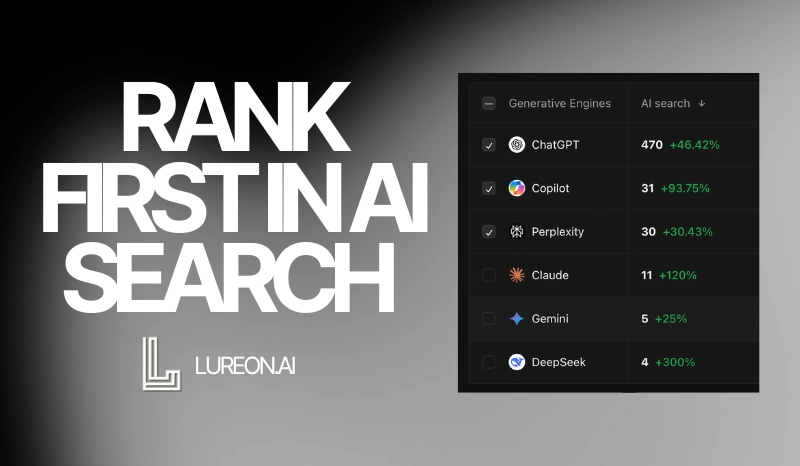
Copilot, Perplexity, Gemini, and Google AI Overviews each have distinct citation behavior and source preferences. Since only around 11% of domains get cited by more than one engine, optimizing for ChatGPT alone leaves visibility on the table across the rest of the AI search landscape.
Avoiding Common GEO Mistakes in 2026
Treating GEO as a one-time project
With citation decay now measured in weeks rather than months, a "publish and forget" approach falls behind fast. GEO in 2026 requires the same ongoing cadence as paid media or technical SEO — not a one-off content sprint.
Optimizing for ChatGPT only
Each AI engine has different source preferences: ChatGPT weighs domain reputation and readability, Perplexity prioritizes verifiable inline citations, and Gemini still inherits much of Google's traditional ranking signal. A single-engine strategy caps your reach.
Ignoring off-site presence
AI engines increasingly pull from forums, video platforms, and social content, not just owned domains. Neglecting Reddit, LinkedIn, and YouTube presence limits how often your brand surfaces in AI-composed answers.
Inconsistent facts across pages
Trust signals still collapse when facts contradict each other across your own site. ChatGPT generally skips citing a source entirely if it detects conflicting information on different pages — a fact-checking pass before publishing remains non-negotiable.
Choosing the Right ChatGPT Optimization Service in 2026
With GEO agencies multiplying and AI engine fragmentation increasing, the bar for a genuinely useful partner has gone up. Our team at Lureon.ai bases guidance on measured citation outcomes, not promises.
What to look for in an AI SEO agency in 2026
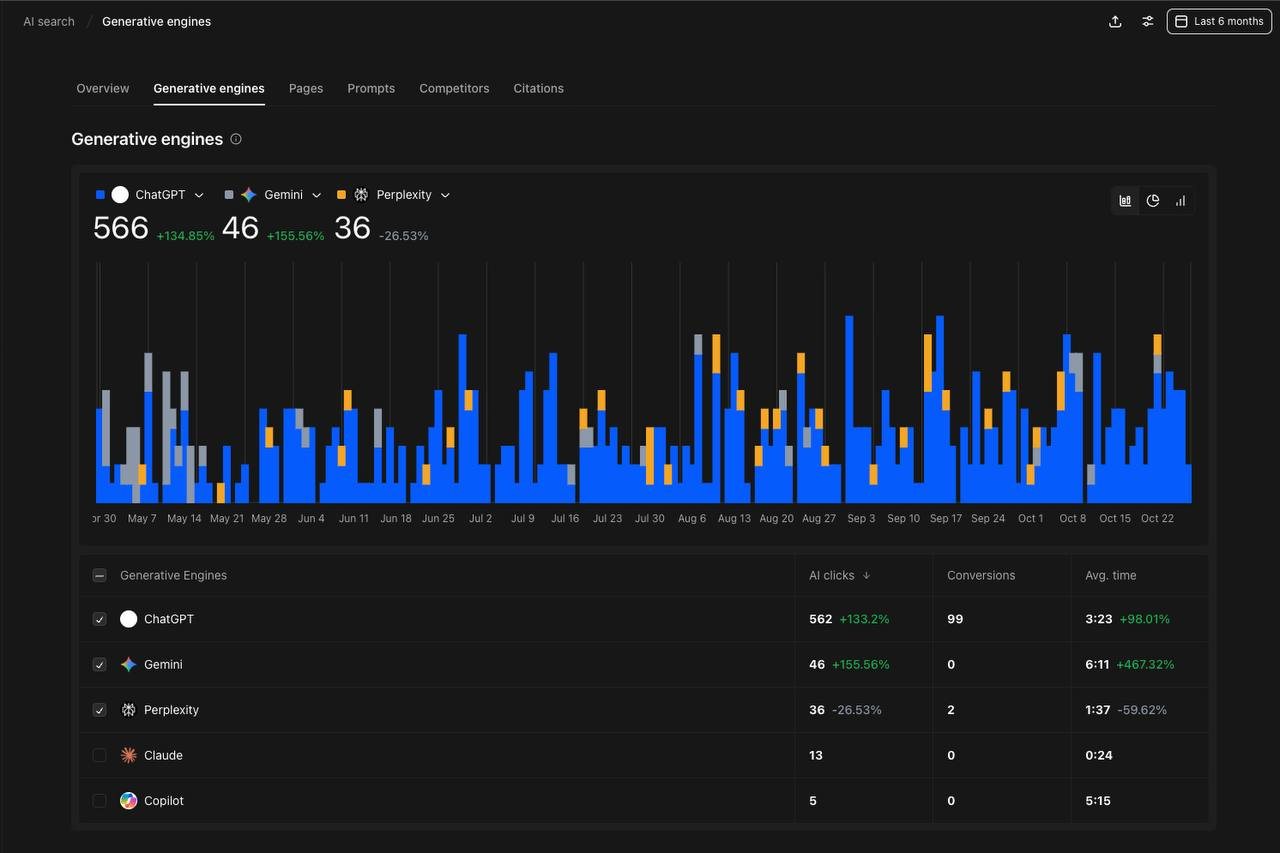
Look for a partner who monitors citation performance across multiple engines (ChatGPT, Perplexity, Gemini, Copilot) rather than reporting on ChatGPT alone, and who can connect citation frequency to actual referral traffic and conversion data — AI-referred traffic converts at meaningfully higher rates than organic search, so the ROI case should be measurable, not theoretical.
How to vet a ChatGPT optimization service
Ask ChatGPT itself about leading AI-focused SEO agencies and see who shows up. Review how a prospective partner handles schema implementation, fact-density audits, and refresh cadence. Ask for citation-frequency data, not just anecdotal "we got you mentioned once" case studies.
When to bring in outside help
Consider a specialist if your organic traffic has plateaued, your team lacks bandwidth to refresh content on a 4–6 week cycle, or you're expanding into new markets where AI search behavior differs by region. Internal follow-through still matters most — even the best GEO recommendations need someone to implement them.
Custom Strategies for Ranking on ChatGPT
Conclusion
ChatGPT has gone from breakout product to core internet infrastructure, crossing 1 billion monthly users in 2026 while competing directly with Gemini, Perplexity, and Copilot for the same citation opportunities. Businesses working with Lureon.ai are adapting by treating GEO as an ongoing discipline rather than a one-time optimization pass.
The immediate priorities for 2026: structure content around fan-out sub-queries, front-load direct answers in the first third of the page, refresh high-value content every 4–6 weeks, and monitor citation frequency across more than one AI engine. Content freshness now matters more than in traditional SEO, and authority increasingly depends on consensus across independent sources, not just backlink count.
Whether managed in-house or with specialists, starting with a citation audit across ChatGPT, Perplexity, and Gemini — and a refresh schedule for your highest-value pages — is the fastest way to stay visible as AI search keeps compounding its share of discovery.
FAQs
1. How can I improve my content's visibility on ChatGPT in 2026?
Focus on high-quality, trustworthy content with clear structure and a direct answer in the first third of the page. Use short, 120–180 word sections, implement FAQPage and HowTo schema, and refresh your content every 4–6 weeks rather than annually.
2. How has content freshness changed for ChatGPT rankings in 2026?
Citation decay has accelerated. Pages that don't get refreshed can lose most of their citation volume within 4–6 weeks as competitors publish newer content. Freshness is now closer to a hard requirement than a ranking bonus.
3. Do I need to optimize for engines other than ChatGPT?
Yes. Only around 11% of domains are cited by more than one AI engine, so ChatGPT-only optimization leaves significant visibility on the table across Perplexity, Gemini, and Copilot.
4. What are the biggest GEO mistakes in 2026?
Treating GEO as a one-time project instead of an ongoing cadence, optimizing for a single AI engine, ignoring off-site presence on platforms like Reddit and LinkedIn, and publishing inconsistent facts across pages.
5. When should I consider hiring a ChatGPT optimization service?
Consider outside help if your organic traffic has plateaued, your team can't sustain a 4–6 week content refresh cycle, or you're expanding into markets with different AI search behavior. Make sure you have the internal resources to act on recommendations.