
Voice search has crossed a new threshold in 2026. People aren't just talking to search engines anymore — they're talking to generative AI agents. With Amazon's Alexa+ now generally available across the US and Google rolling out Search Live voice-and-video search to 200+ countries, voice queries now regularly hit 27–31% of all searches, and 8.4 billion voice assistants remain active worldwide — more devices than people on the planet.
Our team at Lureon.ai has watched voice search optimization become non-negotiable for business visibility. Local businesses still have the biggest opportunity: 76% of voice searches look for nearby establishments.
Voice commerce is projected to reach $164 billion by 2028, growing at roughly 22–24% annually, as payment authentication via voice biometrics and smart speaker penetration (42% of US households) turn voice into a real transaction channel — not just an information channel.
What's changed since 2025: voice assistants aren't just answering questions with scripted responses anymore. Generative AI has made them conversational, multi-turn, and increasingly multimodal. That shift changes what "optimized" content actually looks like.
Key Takeaways
- Voice queries keep growing: voice now accounts for roughly 27–31% of all search queries in 2026, averaging 7–8+ words and full natural-language questions.
- Generative AI has taken over voice assistants: Alexa+ (built on Amazon Nova and Anthropic's models) and Google's Search Live now hold multi-turn, conversational exchanges instead of single-shot Q&A.
- Local intent still dominates: 76% of voice searches focus on finding nearby businesses, and 76% of those searchers visit within a day.
- Conversational content still wins: long-tail keywords and FAQ formats that mirror natural speech continue to outperform keyword-fragment copy.
- Multimodal is no longer "emerging" — it's shipping. Voice + visual search (Google Search Live, ChatGPT voice mode) is now a mainstream feature, not a beta.

Understanding the Shift from Voice to Generative, Multi-Turn Search
Voice search technology has moved past simple command-and-answer. Our team at Lureon.ai has watched assistants evolve from keyword matching, to semantic understanding, to full generative conversation in the space of a few years.
How Generative AI Powers Today's Voice Assistants
2026's flagship voice assistants no longer just retrieve a pre-written answer — they generate one, in context, across a multi-turn conversation. Amazon's Alexa+ (generally available since February 2026, built on Amazon Nova and Anthropic's models) can hold a back-and-forth conversation, remember context from earlier in the exchange, and complete multi-step tasks. Google's Search Live extends this to voice-and-video together, now available in more than 200 countries.
Ask a modern assistant about "restaurants near me that are still open and take reservations," and it now reasons through location, time, availability, and booking intent in a single conversational turn — not three separate searches.
Natural Language Processing in AI SEO
NLP remains the bridge between how people talk and how machines understand them, but the bar has risen. Roughly a third of online adults now use voice AI weekly, and generative voice agents increasingly personalize responses based on prior context rather than returning a generic answer — about 40% of voice assistants now use generative AI to tailor what they say.
Why Voice Queries Are Longer and More Conversational Than Ever
Voice searches still differ from typed searches in the same fundamental ways, but the gap has widened as generative assistants encourage longer exchanges:
- Length and structure: Voice queries run 7–8+ words on average, some studies now put full conversational exchanges closer to 20–30 words, compared to 3–4 words for typed search.
- Conversational format: Users talk to assistants like a person — "Alexa, where can I get tested for gluten intolerance nearby?" instead of typing "allergy specialist."
- Question-based: Most voice searches still open with who, what, where, when, why, or how, expecting a direct answer.
- Multi-turn and contextual: Generative assistants now retain context across a conversation, so a follow-up like "what about ones open on Sunday?" gets understood without repeating the original query.
These differences still demand a distinct approach to AI voice search optimization — and now a distinct approach to conversational optimization, since assistants increasingly hold a dialogue rather than answer once and stop.
Best Practices for Voice Search Optimization in 2026
People speak to generative AI assistants even more naturally than they did to first-generation voice search. Our team at Lureon.ai has identified the practices that matter most as voice moves fully into the generative era.
Writing Conversational Content for Generative Voice Assistants
Voice queries still use natural language rather than keyword fragments, but content now needs to hold up across multi-turn exchanges, not just a single question. Write in a conversational tone, use "you" and "your," and make sure each section can stand alone as a complete, direct answer — generative assistants will paraphrase and recombine your content rather than reading it verbatim.
Using Structured Data: FAQ, HowTo, and Speakable Schema
Schema markup remains one of the strongest voice and AI-citation signals. Pages using Article, HowTo, or FAQ schema are still roughly 80% more likely to get cited by large language models and voice-generative assistants alike.
Speakable schema continues to mark the best sections for audio playback via text-to-speech. Keep speakable sections to 20–30 seconds (about 2–3 sentences) for the cleanest audio experience.
Improving Page Speed and Mobile Responsiveness
Mobile still handles the majority of voice searches, so responsive design and fast load times remain foundational. Voice-sourced result pages typically load in under five seconds — roughly twice as fast as the average web page.
Google still expects all three Core Web Vitals to pass: Largest Contentful Paint (LCP), Interaction to Next Paint (INP), and Cumulative Layout Shift (CLS).
PageSpeed Insights still catches most of the performance issues worth fixing before they cost you voice visibility.
Creating FAQ Pages Built for Multi-Turn Voice
Roughly a fifth of all voice queries still cluster around a small set of question-word patterns ("how," "what," "best," "easy"). FAQ pages remain one of the highest-leverage formats — but in 2026, structure them so a follow-up question ("what about pricing?" after "what services do you offer?") is answered nearby, since generative assistants often chain FAQ entries together in a single conversational response.
Each answer should stay clear and helpful, without promotional language. FAQ schema may not always generate a classic rich snippet, but well-organized Q&A content still helps both voice assistants and AI search engines locate your answers.

Local and Mobile SEO for Voice-Driven Discovery
Local voice search remains one of the clearest ROI opportunities in 2026. Our team at Lureon.ai continues to see most voice searches carry local intent, with a majority of consumers looking up local business information this way.
Optimizing for 'Near Me' and Local Intent Queries
76% of voice searches still focus on nearby businesses, and 76% of smart speaker users perform local searches weekly. Optimize for natural phrases like "where's the nearest coffee shop that's open now?" or "find a plumber near me" — increasingly phrased as compound, multi-condition questions rather than simple lookups.
Location still matters enormously: a large share of voice queries carry geographic terms, explicit or implied.
Enhancing Google Business Profile with Voice-Friendly Data
A complete, current Google Business Profile remains essential for voice visibility. Keep your business name, address, phone number (NAP), hours, and categories accurate and updated — generative assistants pull directly from this data when answering compound local queries.
Reviews still move the needle: more positive feedback continues to improve visibility in voice and AI-generated local results. Local business schema keeps making it easier for assistants to parse your data correctly.
Voice Search and Foot Traffic: Measuring Offline Impact
Voice searches still convert to physical visits at a high rate: 76% of people who search for something nearby visit within a day, and 28% of consumers call the business they found through a voice query.
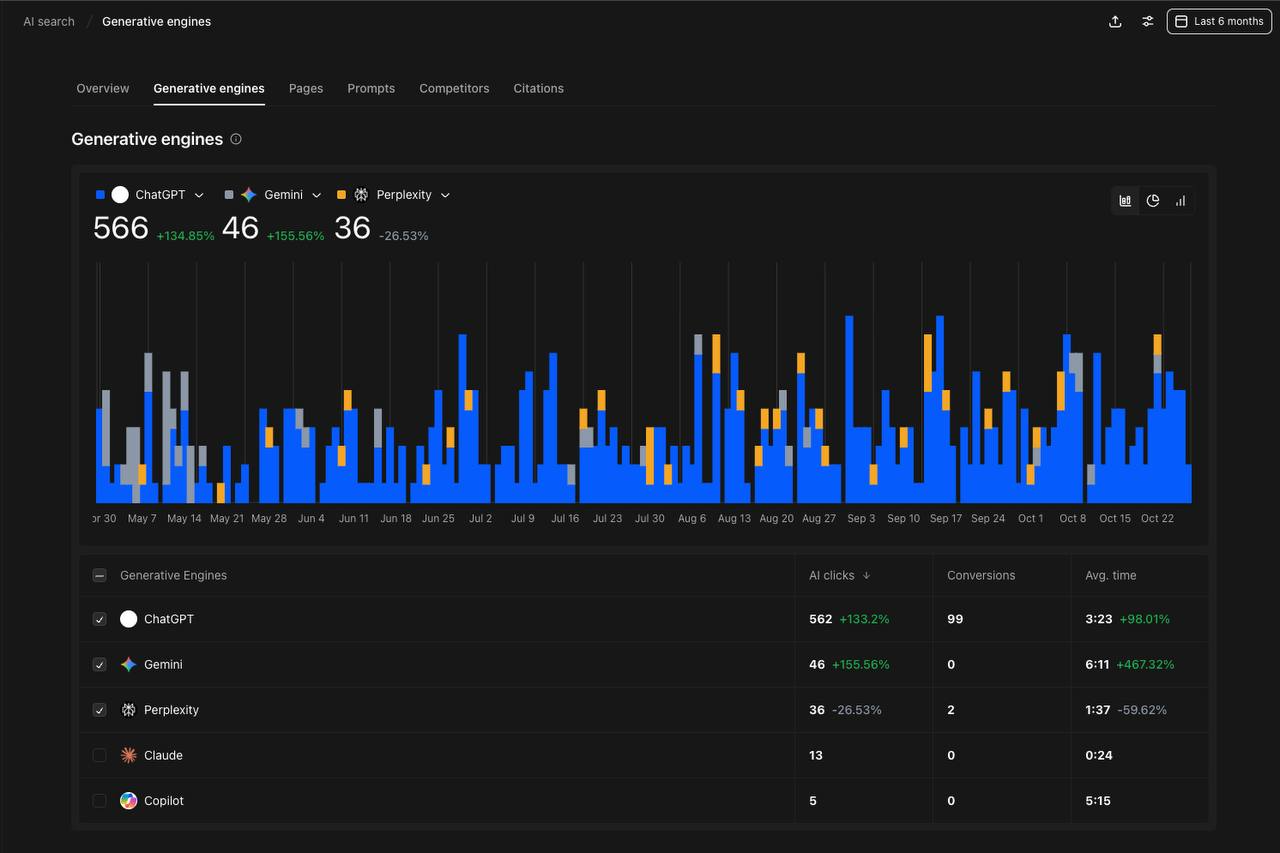
The Multimodal, Generative Search Era Is Already Here
Lureon.ai tracks this shift closely: voice is no longer a standalone channel. Google's Search Live now handles voice and video together across 200+ countries, and OpenAI's ChatGPT voice mode is accelerating professional adoption of conversational AI search.
Voice + Visual: Optimizing for Multimodal Assistants
Multimodal search now genuinely combines text, voice, image, and video in a single exchange. Gen Z users increasingly open searches with a visual input before ever typing or speaking a word. Your content should include:
- High-quality images with descriptive metadata
- Video content with text explanations and captions
- Schema markup for products, events, and how-to's, since multimodal assistants lean on structured data to connect what they "see" with what they say
Making Voice SEO Work with Accessibility Standards
Voice search optimization still naturally aligns with web accessibility. Sites built for voice assistants continue to work better with screen readers and other assistive technologies.
Structured data still powers both voice search and accessibility features, helping people with visual, physical, or cognitive impairments. As generative voice adoption grows, clear semantic markup only becomes more important.
Learning from Voice and Conversational Query Data
Voice and conversational analytics now offer a richer picture of customer intent than ever, since multi-turn exchanges reveal not just what someone asked, but what they asked next. Before optimizing, dig into which conversational query chains actually bring traffic to your site.
Content that answers a question and anticipates the natural follow-up will perform best across both voice and multimodal search in 2026.
Custom AI Voice Search Optimization Strategies
Conclusion
Voice search optimization has entered its generative-AI phase in 2026. With Alexa+ generally available, Google Search Live live in 200+ countries, and voice assistants still outnumbering the global population at 8.4 billion active devices, voice-first behavior is reshaping search across every industry.
The shift from keyword-focused SEO to conversational, multi-turn, context-aware content remains the most significant change since mobile-first indexing — and it's now compounded by generative assistants that hold real dialogues instead of answering once and stopping.
To succeed, businesses should build conversational content, implement structured data, optimize page speed, develop voice-friendly and follow-up-aware FAQs, and strengthen local SEO. Companies that adapt now will hold a meaningful visibility and engagement advantage as voice-first, multimodal search becomes the default.
FAQs
1. How is voice search changing the way people find information online in 2026?
Voice search has moved into a generative, multi-turn era. With 8.4 billion active voice assistants and roughly 27–31% of all searches happening by voice, assistants like Alexa+ and Google Search Live now hold conversations rather than answering a single question and stopping.
2. What are the key differences between voice and text searches?
Voice searches are typically longer (7–8+ words, often more in multi-turn exchanges) and more conversational than text searches (3–4 words). They're frequently phrased as full questions, use natural language, and often carry local intent.
3. How can businesses optimize their content for voice search in 2026?
Create conversational content using long-tail keywords, implement structured data (FAQ, HowTo, Speakable schema), keep pages fast, build FAQ pages that anticipate natural follow-up questions, and prioritize local SEO.
4. Why is local SEO still important for voice search optimization?
Local SEO remains critical because 76% of voice searches focus on finding nearby businesses, and 76% of those searchers visit within a day. Local voice optimization directly impacts foot traffic and calls.
5. What should businesses prepare for next in voice and multimodal search?
Businesses should prepare for fully multimodal, generative search experiences that combine voice, visual, and text in a single conversation. This means high-quality images and video, robust structured data, and content built to handle natural follow-up questions.