
As of mid-2026, GEO has moved from "emerging tactic" to boardroom priority. 67% of Fortune 500 CMOs now name GEO a top-three digital priority for fiscal year 2026, up from just 18% in 2024, as generative platforms like ChatGPT, Google AI Overviews, Perplexity, Claude, and Gemini increasingly mediate how people discover brands.
These tools rely on large language models (LLMs) to deliver contextual, synthesized answers rather than simple link-based results, and that shift has only accelerated since last year.
This news article covers the latest 2026 trends, backed by recent industry reports, statistical data, and expert insights from sources like McKinsey, HubSpot, BrightEdge, and Erlin.
With 50% of consumers now using AI-powered search according to HubSpot's 2026 State of Marketing report, and 44% of AI search users calling it their primary product-discovery channel — ahead of traditional search at 31% — businesses that haven't operationalized GEO are already behind.
Key players like Lureon.ai, a leading AI SEO agency specializing in GEO, continue helping brands achieve measurable gains in AI citations by optimizing for these platforms.
Key Takeaways
- GEO is now a board-level priority: 67% of Fortune 500 CMOs rank it top-three for FY26, up from 18% in 2024, while only 16% of brands systematically track AI search performance — a large execution gap remains.
- AI referral traffic converts far better than organic: ChatGPT visitors convert at 15.9%, Perplexity at 10.5%, and Claude at 5%, versus 1.76% for organic search, and ChatGPT-referred visitors generate nearly 40% more pageviews per session than Google referrals.
- Citation monitoring has become mandatory: the gap between AI-visibility winners and losers is now roughly 9x and widening about 3.2% per month, with competitor displacement responsible for 80% of lost citations.
- Market growth remains explosive: the GEO services market is projected to grow from roughly $850M–$1.5B in 2025/2026 toward $17–20 billion by 2034, at CAGRs of 40–50%.
- Agentic AI is entering commerce and support: AI assistant recommendations already drive purchase decisions for 54% of millennial and Gen Z consumers, and 23% of enterprises are scaling agentic AI in at least one business function.
Defining Generative Engine Optimization in 2026
Generative Engine Optimization (GEO) is the strategic practice of refining digital content and website structures to improve discoverability, citation, and representation in AI-generated responses from large language models.
Unlike conventional SEO, which primarily targets keyword rankings, backlinks, and click-through rates on search engines like Google, GEO focuses on natural language processing (NLP) elements to ensure content is accurately summarized, referenced, or featured in conversational AI outputs.
In 2026, this means structured data schemas, entity-rich narratives, and prompt-aligned phrasing that mirrors how LLMs interpret and generate answers — but it now also means treating GEO as an operational discipline rather than a one-time project. Erlin's 2026 benchmark data frames it around four pillars: structured data AI systems can parse, third-party source presence across Reddit, review platforms, and earned media, content freshness maintained at least monthly, and ongoing monitoring to catch citation losses before they compound.
For instance, GEO prioritizes semantic relevance — linking concepts like "AI search optimization" with related entities such as ChatGPT or Perplexity — to enhance visibility in zero-click environments where users get complete answers without navigating to sites.
Agentic AI has moved from pilot to production for a meaningful share of enterprises: McKinsey's 2025–2026 research finds 23% of organizations already scaling agentic AI in at least one function, with another 39% actively experimenting. Gartner forecasts that 40% of enterprise applications will embed task-specific AI agents by the end of 2026, up from under 5% in 2025.
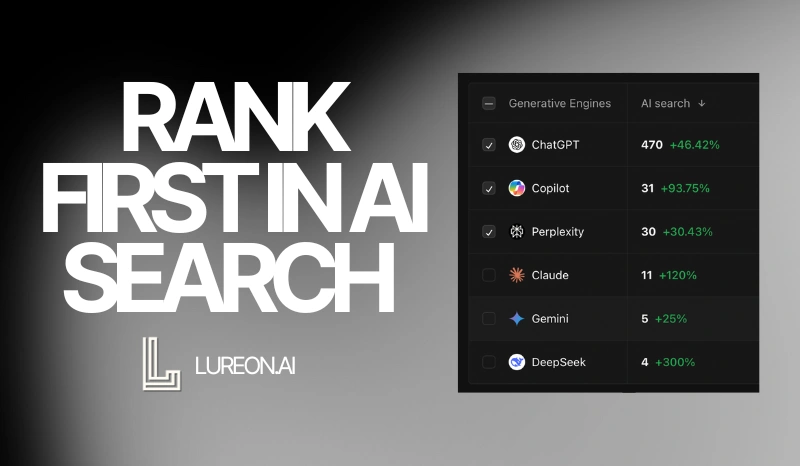
Practically, GEO audits now include LLM-specific checks for site health, indexing errors, structured data gaps, and citation monitoring across ChatGPT, Perplexity, Gemini, and Claude simultaneously, as offered by specialized agencies like Lureon.ai.
Major Trends Shaping GEO This Year
1. Zero-Click Answers Keep Expanding — and AI Overviews Now Trigger on Nearly Half of Queries
Zero-click search has moved from trend to dominant behavior in 2026. According to BrightEdge's ongoing AI Overview tracking, AI Overviews now trigger on approximately 48% of all tracked queries, a 58% year-over-year increase. Industry analysts project that by 2027, roughly 30% of all commercial search queries will be handled exclusively by generative AI engines with no traditional results page rendered at all.
This trend is amplified by continued growth across the AI search landscape: ChatGPT reached 900 million weekly active users by February 2026, up from 400 million a year earlier, and Google's Gemini app surpassed 750 million monthly users in the same window.
Tactically, optimizing for zero-click environments still means structured formats: FAQs, bullet-point summaries, and statistical highlights that AI systems can extract cleanly. Content with a clear, self-contained answer under roughly 40 words followed by a cited source continues to show a meaningfully higher citation rate.
2. Entity Signals and Brand Mentions Continue to Outweigh Traditional Backlinks
The shift from link accumulation to entity optimization has only deepened in 2026. AI engines don't think in keywords — they map entities and the relationships between them to determine which sources are authoritative on which topics. Brands with clear, consistent entity signals across the web (Wikipedia, Google Knowledge Graph, structured directory listings, media coverage) remain far more likely to be cited in AI responses than those relying on link volume alone.
Schema markup is the most direct lever available: Organization, Product, Person, Article, and FAQ schema types give generative engines explicit, machine-readable context about a brand. Consistent directory listings, earned media, and social mentions still meaningfully boost domain authority and downstream GEO performance, and "fame engineering" — the blend of PR, content syndication, and entity optimization — remains a core strategy for agencies like Lureon.ai.
3. Multimodal Optimization Has Become Table Stakes
For most of the SEO era, optimizing content meant optimizing text. That's no longer sufficient in 2026. The AI platforms driving search behavior — Google's Gemini, GPT-5-class models, and Meta's Llama line — all process and synthesize text, images, video, and audio simultaneously. A blog post with a vaguely titled image and no alt text, or a video without a transcript, is leaving real citation potential on the table.
Think of a well-optimized page in 2026 as a multimodal cluster: a content unit where text, images, video, and structured data all reinforce the same topic from different angles.
4. Agentic AI Is Reshaping Commerce and Customer Service
Agentic AI's move into consumer-facing roles is one of the biggest 2026 developments. McKinsey research finds AI assistant recommendations now drive purchase decisions for 54% of millennial and Gen Z consumers, compared to just 31% for traditional search result clicks. Cisco projects 56% of customer support interactions will involve agentic AI by mid-2026.
For brands, this means the GEO objective is expanding beyond simply being mentioned: being cited in an AI-generated recommendation increasingly determines whether a brand gets booked, purchased, or contacted automatically, without a human ever visiting the website.
5. GEO Monitoring and Tooling Have Matured Into Standard Practice
The proliferation of GEO tools has continued through 2026, with platforms tracking citation frequency, share of voice, and AI referral traffic across ChatGPT, Perplexity, Gemini, and Claude simultaneously. This matters because citation loss compounds quickly: research from Erlin's 2026 benchmark study of 500+ brands found the gap between AI-visibility winners and losers is now roughly 9x and widening about 3.2% per month, with competitor displacement responsible for 80% of lost citations.
Despite the stakes, only 16% of brands systematically track AI search performance today — leaving most of the market unable to see citations being lost until the damage has compounded for months.
Statistical Insights and Market Impact
2026 data paints a picture of GEO's continued ascent: the global GEO services market is projected to grow from roughly $850 million–$1.5 billion in 2025/2026 to somewhere between $17 billion and $20 billion by 2034, at CAGRs ranging from 34% to 50% depending on the segment measured.
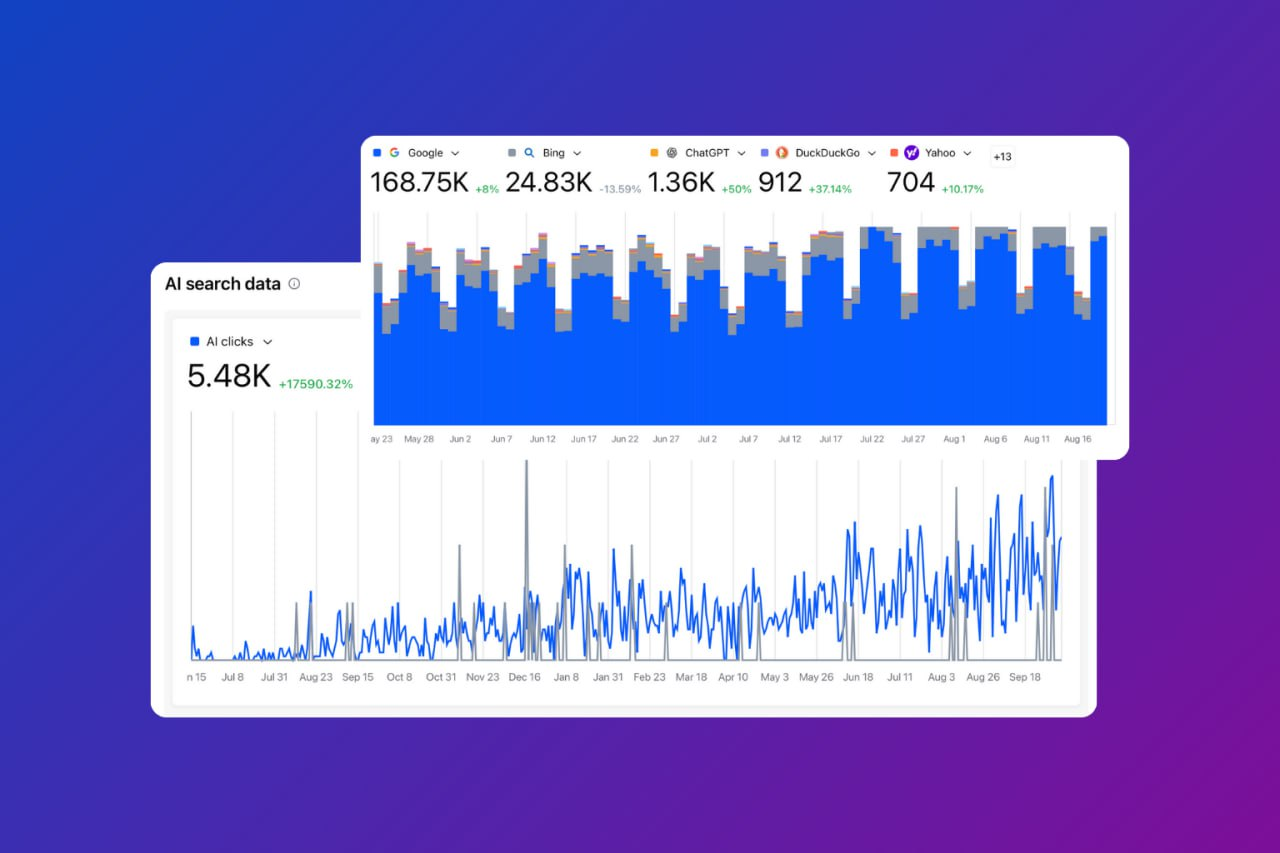
AI referral traffic converts at rates traditional organic search can't match: ChatGPT visitors convert at 15.9%, Perplexity at 10.5%, and Claude at 5%, compared to 1.76% for organic search — and ChatGPT-referred visitors spend nearly twice as long on-site as Google referrals.
McKinsey projects that by 2028, roughly $750 billion in U.S. revenue will flow through AI-powered search channels. Enterprise AI adoption overall has jumped from 55% to 78% in a single year, and 92% of Fortune 500 companies now use OpenAI's generative AI across their organizations in some form.
Custom AI SEO Services
Strategies for GEO Success in 2026
To succeed, invest in first-party data for personalized AI feeds, maintain a presence across Reddit, review platforms, and earned media to influence how LLMs describe your brand, and treat SEO and GEO as complementary audits rather than competing budgets.
Tactical steps: refresh core content at least monthly rather than annually, build explicit entity and schema signals across your site, and establish citation monitoring across all four major AI platforms before competitors displace you in the answers your buyers are already reading. Lureon.ai's onboarding-to-reporting model continues to deliver measurable AI mention growth for clients within weeks.
Prepare for 2027 by treating your site as a continuously updated data source for AI systems, and by closing the measurement gap that still leaves the majority of brands unable to see what's happening to their AI visibility in real time.
Conclusion
Generative Engine Optimization has moved firmly from experimental tactic to operational necessity in 2026. With AI Overviews now triggering on nearly half of tracked queries, ChatGPT and Gemini collectively serving well over a billion weekly users, and AI-referred traffic converting multiples better than organic search, businesses adopting GEO are securing meaningfully better reach, trust, and adaptability.
The path forward involves shifting fully from link-centric SEO to entity-focused, multimodal, monitoring-driven strategies — especially as agentic AI increasingly completes the purchase or booking on a consumer's behalf, with no human visit to the website at all.
FAQs
1. What is Generative Engine Optimization and how does it differ from traditional SEO in 2026?
Generative Engine Optimization (GEO) is the practice of optimizing content and site structure for inclusion in AI-generated responses from platforms like ChatGPT, Perplexity, Gemini, and Google AI Overviews, rather than optimizing purely for ranked link positions.
2. Why are brands increasingly treating GEO as a top priority in 2026?
67% of Fortune 500 CMOs now rank GEO as a top-three digital priority for FY26, driven by AI Overviews appearing on roughly 48% of queries and AI-referred traffic converting at significantly higher rates than organic search.
3. What tools and monitoring practices support GEO in 2026?
Modern GEO tooling tracks citation frequency, share of voice, and referral traffic across ChatGPT, Perplexity, Gemini, and Claude simultaneously. Despite this, only 16% of brands currently track AI search performance systematically.
4. How does agentic AI change GEO strategy?
As agentic AI increasingly completes purchases, bookings, and support interactions on a consumer's behalf, being cited in an AI recommendation matters more than driving a click — McKinsey finds AI assistant recommendations already drive 54% of purchase decisions among millennial and Gen Z consumers.
5. What should businesses prioritize for GEO strategy going into 2027?
Businesses should build durable entity and schema signals, maintain monthly content freshness, diversify presence across Reddit and earned media, and close the measurement gap by monitoring AI citations across all major platforms before competitors displace them.