
Did you know that 67% of businesses already use AI for SEO, with 78% reporting satisfaction with the results?
The SEO industry was worth $68.1 billion globally in 2022 and is projected to reach $129.6 billion by 2030, while Gartner's research predicts a 25% drop in traditional search traffic by 2026, underscoring the necessity of AI SEO for business survival.
High stakes are evident, with 46% of entrepreneurs viewing AI as pivotal to success in the next five years, though 80% of users neglect SEO updates in the first 90 days after website launch.
Lureon.ai takes advantage of LLM SEO techniques and AI tools to automate keyword research, content optimization, and link building, supported by real-time analytics for immediate improvements.
Without adopting AI-powered SEO, companies face significant risks of losing market share and revenue. This article provides actionable tips to implement AI for enhanced search rankings today.
Key Takeaways
- AI SEO differs fundamentally from traditional SEO: Focus on appearing in AI-generated responses rather than just ranking in search results, as 60% of mobile searches now end without clicks.
- Use AI tools to uncover hidden opportunities: Leverage AI-powered platforms to analyze competitors, identify content gaps, and discover long-tail keywords that manual research typically misses.
- Combine AI efficiency with human creativity: Use AI for content briefs and outlines, but ensure human expertise adds personal insights, conversational tone, and quality that resonates with audiences.
- Implement AI-powered technical audits: Run comprehensive site diagnostics that identify and prioritize SEO issues in minutes rather than weeks, focusing on broken links, duplicate content, and HTML structure.
- Optimize for both traditional and AI search: Structure content with semantic HTML, proper headings, and factual accuracy to perform well in standard results and AI citations simultaneously.
Understanding AI SEO and LLM SEO Basics
AI search optimization is replacing traditional SEO approaches faster than ever. ChatGPT processes over 2.5 billion prompts daily and serves more than 120 million users. This signals a clear move toward AI-driven search, so let's explore AI SEO basics and how it reshapes digital visibility.
What is AI SEO and how it works
AI SEO optimizes content to excel in AI-driven search environments like large language models (LLMs), generative AI tools, and chat-based interfaces. Your content needs to appear in AI-generated responses rather than just search results pages, unlike traditional search.
AI models learn to recognize, rank, and cite your content as trustworthy sources in their answers. You need content that machines can read easily with a well-laid-out structure and factual accuracy. AI tools analyze indexed content and generate relevant responses that cite authoritative sources when users ask questions.
Your content must show these qualities for AI systems to favor it:
- Clear structure with proper headings and organization
- Factual accuracy with verifiable information
- Detailed coverage of topics
- Strong E-E-A-T signals (Experience, Expertise, Authoritativeness, Trustworthiness)
Difference between AI SEO and traditional SEO
Traditional SEO ranks web pages in search engines. AI SEO focuses on appearing in AI-generated responses. Research shows nearly 60% of Google searches on mobile end without a click.
This highlights why being cited in AI answers matters more now.
Key differences include:
| Traditional SEO | AI SEO |
|---|---|
| Focus on keyword matches and page-level relevance | Emphasis on conversational prompts and passage-level context |
| Success measured by traffic, rankings, and click-through rates | Success measured by mentions and visibility in AI responses |
| Reactive strategies adapting after algorithm updates | Predictive analysis with live optimization |
| Short keyword-focused queries | Natural language processing of complex questions |
| Users spend seconds scanning results | Users participate in extended conversations with multiple prompts |
Traditional SEO displays a ranked list of links. AI search creates blended answers that mention sources directly. This fundamental change demands a new optimization approach.
Introduction to LLM SEO and AI search optimization
LLM SEO optimizes content specifically for large language models. Known as Generative Engine Optimization (GEO), it makes your content clear and credible so AI models cite it in their responses.
Gartner predicts traditional search volumes might drop by up to 25% by 2026 as AI-driven engines handle more queries. Studies reveal 90% of businesses worry about decreasing online visibility due to AI answers and LLMs.
LLM SEO needs:
- Content structured for machines and humans with proper headings and schema markup
- Conversational content that answers natural language questions
- Deep, detailed information that signals authority
- Content that shows experience and expertise
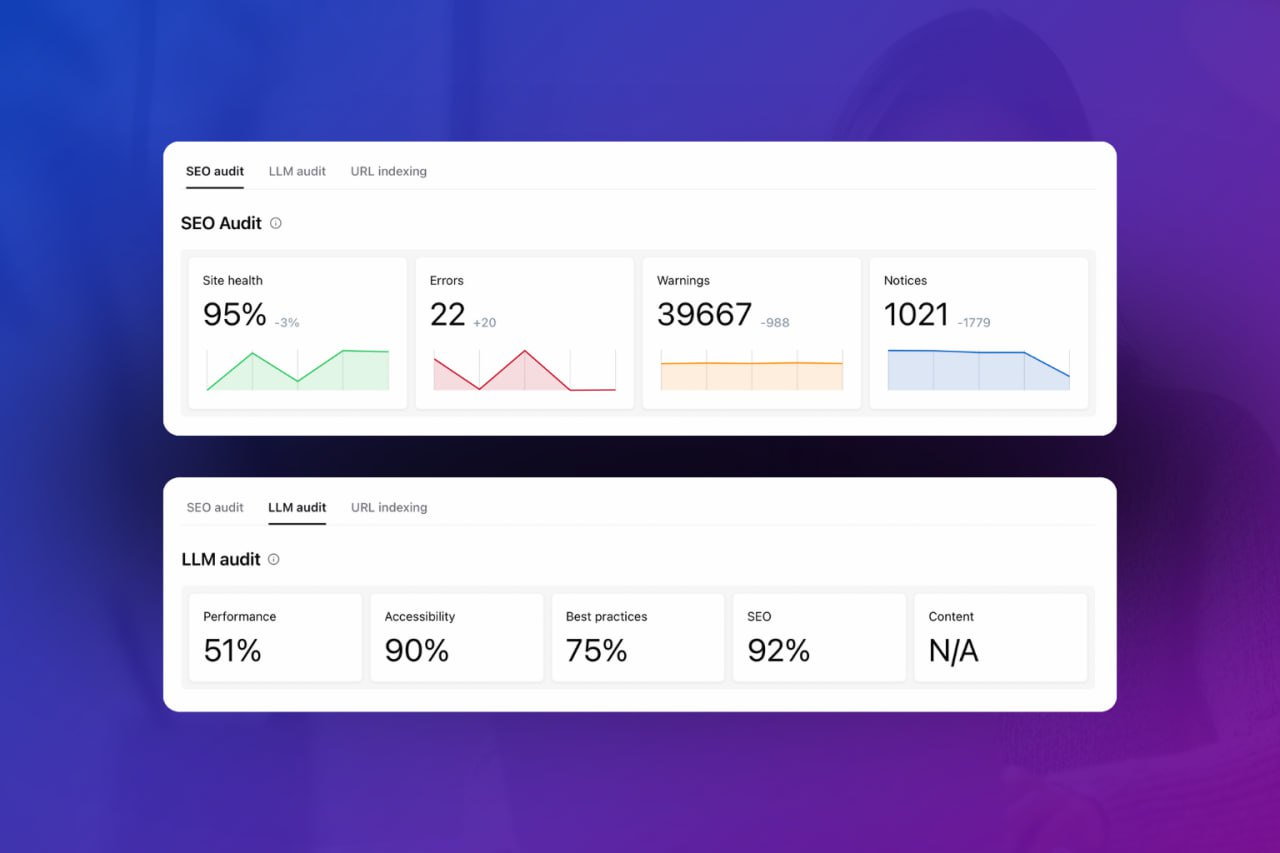
Over 300,000 keywords and found websites ranking on Google's first page strongly correlate with LLM mentions. Quality content optimized for both traditional search and LLMs gives the best visibility across all search experiences.
Finding SEO Opportunities with AI Tools
AI tools now help you find hidden SEO opportunities your competitors might miss. These tools know how to process massive datasets and reveal insights that humans would need weeks to find.
Analyzing competitor content and keywords
AI-powered SEO platforms extract vital competitive intelligence within minutes instead of days. Tools like SEMrush and Ahrefs analyze competitor websites and show their organic search strategies, backlink profiles, and PPC campaigns. You get complete metrics that reveal which keywords drive traffic to competing websites.
To cite an instance, see how Ahrefs' Site Explorer displays estimated organic traffic, top-performing pages, backlink sources, and paid keywords for any competitor site.
This intelligence shows which content strategies stimulate competitor growth and where they invest most heavily.
AI tools excel at assessing the authority and credibility of competitor backlink sources. These informed insights help you prioritize link-building opportunities based on predicted value rather than guesswork.
Identifying content gaps and trends
Content gap analysis improves visibility in both traditional search and generative AI. AI tools compare your content coverage against competitors and find topics they rank for but you don't.
To perform an AI-powered content gap analysis:
- Use keyword gap tools to identify terms competitors rank for that you're missing
- Apply filters for position (top 20) and difficulty (very easy) to find attainable targets
- Review LLM prompt responses where competitors appear but you don't
- Analyze SERP features and AI Overview responses to understand content expectations
AI content gap analysis finds missing topics, entities, intents, formats, and evidence. Your competitors might skip covering a specific integration or niche persona, letting you establish authority by covering it really well.
Research shows winning AI Overview citations matters financially, URLs cited inside AI Overviews keep 68% of their prior click volume even as traditional results see 25% fewer clicks.
Using AI to discover new ranking opportunities
AI excels at finding long-tail keywords, specific phrases with lower search volumes but higher conversion potential. AI algorithms assess vast datasets to uncover these hidden opportunities that manual research often misses.
Right now, each click driven by an AI search result represents about 20 background searches.
This makes optimizing for AI search visibility, not just traffic, a vital KPI.
Many industries show a clear move toward AI-driven discovery. AI search traffic now represents much of organic performance in some sectors. Companies in education, health, and B2B industries already see AI visibility as a key traffic channel.
The best AI-powered keyword research looks beyond explicit search terms to think over query fan-outs, various follow-up questions AI systems might ask when meeting a user request. You can cast a wider net for AI citations by anticipating these query expansions and clustering them by intent.
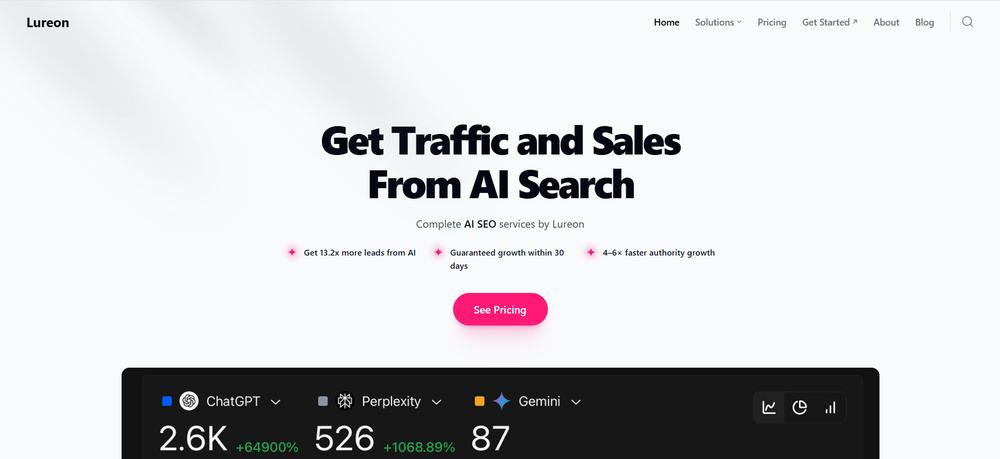
At Lureon.ai, we help clients use these AI tools to find opportunities competitors haven't yet identified, creating content that works well in both traditional and AI-driven search environments.
Building Better Content with AI
AI-optimized content creation needs strategic planning and the right mix of machine efficiency with human expertise. AI tools make the content creation process better by creating efficient workflows without compromising quality.
Creating content briefs with AI
Content briefs are the foundations of successful SEO content creation. AI-powered brief generators analyze top-performing content, identify topic clusters, and extract relevant data points to create complete guidelines. Writers can cover essential subtopics while maintaining search engine relevance with these briefs.
AI content brief tools excel at breaking down complicated ideas, summarizing scientific studies, and turning data into useful insights.
AI analyzes thousands of ranking pages to identify patterns humans often miss, unlike manual brief creation that relies heavily on individual SEO knowledge.
Advanced AI briefs include pain point analysis for target audiences, not just generic personas but detailed breakdowns of specific frustrations for different reader segments. Writers can address audience concerns directly in headlines and introductions, which improves engagement by a lot.
Generating outlines and FAQs
AI outline generators turn scattered ideas into clear, logical content frameworks within seconds. These tools create well-laid-out outlines with H1, H2, and H3 suggestions that guide content creation.
The quickest way to develop content:
- Input your topic into an AI outline generator
- Review the suggested structure
- Customize sections to match your brand voice
- Expand each section with detailed information
AI FAQ generators automatically produce relevant questions based on existing content, customer queries, and data trends.
Good FAQs serve multiple purposes:
They address specific user concerns, target long-tail keywords, and help content appear in featured snippets.
Ensuring human touch in AI-generated content
71% of consumers expect tailored experiences that only human creativity can truly deliver, despite AI's capabilities. AI usually produces what professional writers call an "SFD" (shitty first draft), raw content that needs substantial revision.
Google's helpful content guidelines make one thing clear: content we created mainly for search ranking manipulation violates spam policies.
So, we recommend using AI as a co-pilot rather than the pilot.
You can humanize AI content by:
- Adding personal insights and lived experiences
- Using a conversational tone
- Presenting fresh angles instead of generic information
- Including real-life examples and proprietary data
- Editing anything that feels cold or disjointed thoroughly
AI excels at generating original drafts, but human expertise makes content appeal to audiences and meet quality standards. The best approach combines AI efficiency with human creativity to create content that performs well in both traditional search and AI-driven environments.
Improving Technical SEO with AI
Technical SEO problems can destroy your rankings overnight. Modern AI tools diagnose and fix these problems quicker than any manual process.
Let's get into how AI disrupts technical optimization.
Running AI-powered SEO audits
Technical SEO tools work as specialized diagnosis systems that spot issues keeping your site from ranking well. They find problems like broken links, slow-loading pages, missing metadata, mobile usability errors, and crawling/indexing issues.
AI-powered audits beat traditional manual reviews in several ways:
- Speed: They turn weeks of scattered diagnostics into minutes
- Depth: They check mobile-friendliness and on-page elements at once
- Prioritization: They rank issues by SEO effect, effort, and risk
- Correlation: They link previously isolated signals like crawl errors, render-blocking scripts, and schema coverage
These tools create complete reports with applicable information to improve performance and propel development. At Lureon.ai, we use AI-powered audits to build priority lists that engineering teams can quickly implement.
Fixing broken links and duplicate content
Broken links upset users and show poor quality to search engines, hurting your SERP rankings. AI checks your site in minutes to find broken links and alerts website owners right away.
Duplicate content creates multiple issues: it wastes server space, makes your site slower, and confuses search engines.
AI tools automate detection by finding not just similar pages but near-identical content with slightly changed sentences.
AI can analyze each 404 error and suggest relevant redirect destinations based on content matches. This approach saves hours of manual work and substantially improves backlink retention.
Optimizing HTML semantics and structure
Semantic HTML, markup that shows web content's meaning, is crucial for AI visibility. Search engines and AI systems need it to understand your content's importance and connections.
Good semantic HTML gives you several benefits:
- Better content extraction by AI systems
- More featured snippets in search results
- Better voice search results
- Better accessibility
- Better context awareness
Your HTML structure should use proper heading hierarchy (H1 → H2 → H3) without gaps. AI systems use this hierarchy to understand content relationships and create topic models.
On top of that, it needs schema markup to help machines understand your content type, which lets AI agents classify and reuse information better.
Preparing for the Future of AI in Search
Search is changing faster than ever. AI summaries now appear in about 50% of Google searches. This number will jump to over 75% by 2028. Businesses must adapt their strategies to thrive in this AI-powered future.
Optimizing for AI Overviews and chatbots
Content with HTML-based structure gets cited more often in AI results. Our research shows that well-laid-out content with semantic HTML, proper headings, and schema markup improves AI visibility by a lot.
At Lureon.ai we create factual, well-referenced material that AI systems can easily verify and cite.
Tracking AI visibility and performance
Most brands lag behind in AI search tracking, only 16% do it systematically. Our approach goes beyond traditional SEO KPIs with specialized metrics:
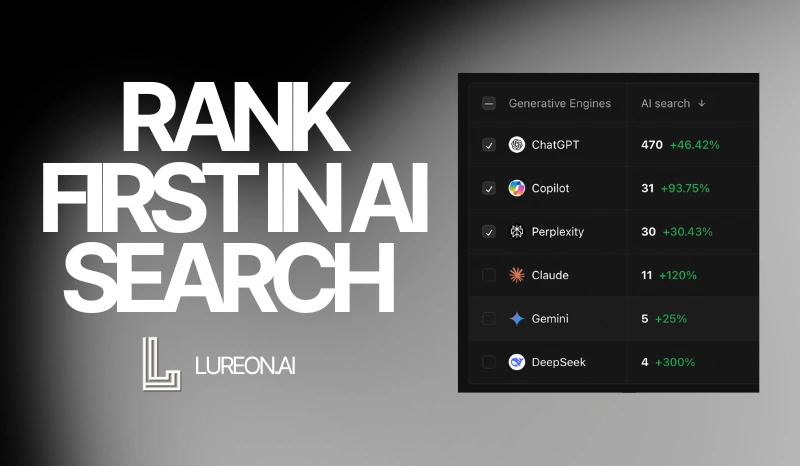
- We monitor brand mentions on ChatGPT, Perplexity, and Google AI Overviews
- We track AI-specific performance indicators like visibility scores, citations, and sentiment
- We analyze traffic from AI engines and compare their conversion rates with traditional search
Building brand signals for AI-driven search
AI systems look at three key signal categories to assess brand credibility: entity identity, evidence citations, and technical health.
Our strategy strengthens these signals through consistent cross-platform profiles and authoritative backlinks while maintaining technical excellence.
The organization schema we implement includes proper sameAs links that create a verified identity AI systems trust and reference.
Conclusion
AI SEO transforms traditional search optimization into content that performs well in both standard results and AI-generated responses, giving early adopters significant advantages.
AI tools enable rapid competitor analysis, keyword research, and content gap identification, while streamlining creation through detailed briefs and outlines, though human expertise remains essential for quality.
AI-powered audits quickly diagnose and fix technical issues like broken links, duplicate content, and HTML problems. Websites optimized for dual traditional and AI visibility will lead the future, with structured, accurate, and authoritative content being key.
Businesses adopting these strategies now, guided by experts like Lureon.ai, will secure long-term digital visibility amid evolving search challenges.
Read Next:
- Generative Engine Optimization News: Latest Trends and Insights 2025
- AI Search Optimization Tools for ChatGPT: Strategies & Top Picks 2025
- How to Optimize for the ChatGPT Ranking Algorithm in 2025
FAQs:
1. How does AI SEO differ from traditional SEO?
AI SEO focuses on optimizing content for AI-generated responses, while traditional SEO aims to rank web pages in search engines. AI SEO emphasizes conversational prompts, passage-level context, and appearing in AI-generated answers rather than just in search results pages.
2. What are some practical ways to use AI for SEO?
AI can be used for competitor analysis, keyword research, content gap identification, and technical SEO audits. AI-powered tools can generate content briefs, outlines, and FAQs, streamlining the content creation process while uncovering hidden opportunities that manual research might miss.
3. Is it safe to use AI-generated content for SEO?
While AI can be helpful in creating initial drafts, it's crucial to add a human touch to ensure quality and engagement. Google's guidelines warn against content primarily created for search ranking manipulation. The most effective approach combines AI efficiency with human creativity and expertise.
4. How can I optimize my website for AI-driven search?
Focus on creating well-structured content with semantic HTML, proper headings, and schema markup. Ensure your content is factual, comprehensive, and demonstrates expertise. Build strong brand signals through consistent cross-platform profiles and authoritative backlinks.
5. What metrics should I track for AI SEO performance?
Beyond traditional SEO KPIs, monitor brand mentions across AI platforms, track visibility scores and citations in AI-generated responses, and analyze traffic and conversion rates from AI engines compared to traditional search. It's also important to assess your content's performance in both standard results and AI-generated answers.