
HR tech raised over $3 billion in the first half of 2025 alone, a 60% jump year over year, and the momentum has carried straight into 2026. AI adoption in HR functions has doubled, and the fastest movers in the category are now scaling at rates once reserved for consumer apps.
The HR software market is no longer a slow-moving corner of enterprise SaaS. Distributed teams, stablecoin-powered payments, and AI agents that source, screen, and interview candidates have redrawn the map of what an "HR startup" even is.
This roundup covers the ten HR startups growing fastest in 2026, based on funding velocity, revenue growth, and product momentum. Each one is solving a different piece of the modern workforce puzzle, from paying global teams in minutes to replacing the first-round interview entirely.
Key Takeaways
- Rise leads the pack with $1.3B+ in processed payroll volume across 190+ countries and the fastest-growing stablecoin payment rails in HR.
- AI recruiting is the hottest funding category, with Mercor in talks at a $20B valuation and Juicebox posting 20%+ monthly growth.
- Frontline and deskless workforces are finally getting purpose-built tools, from Paradox to Orbio AI.
- Engagement and benefits platforms like Advantage Club and Happl are scaling globally on flexible, employee-choice models.
- Speed matters: the common thread across all ten is compressing processes that used to take weeks into minutes.
1. Rise – Global Workforce Payments and EOR
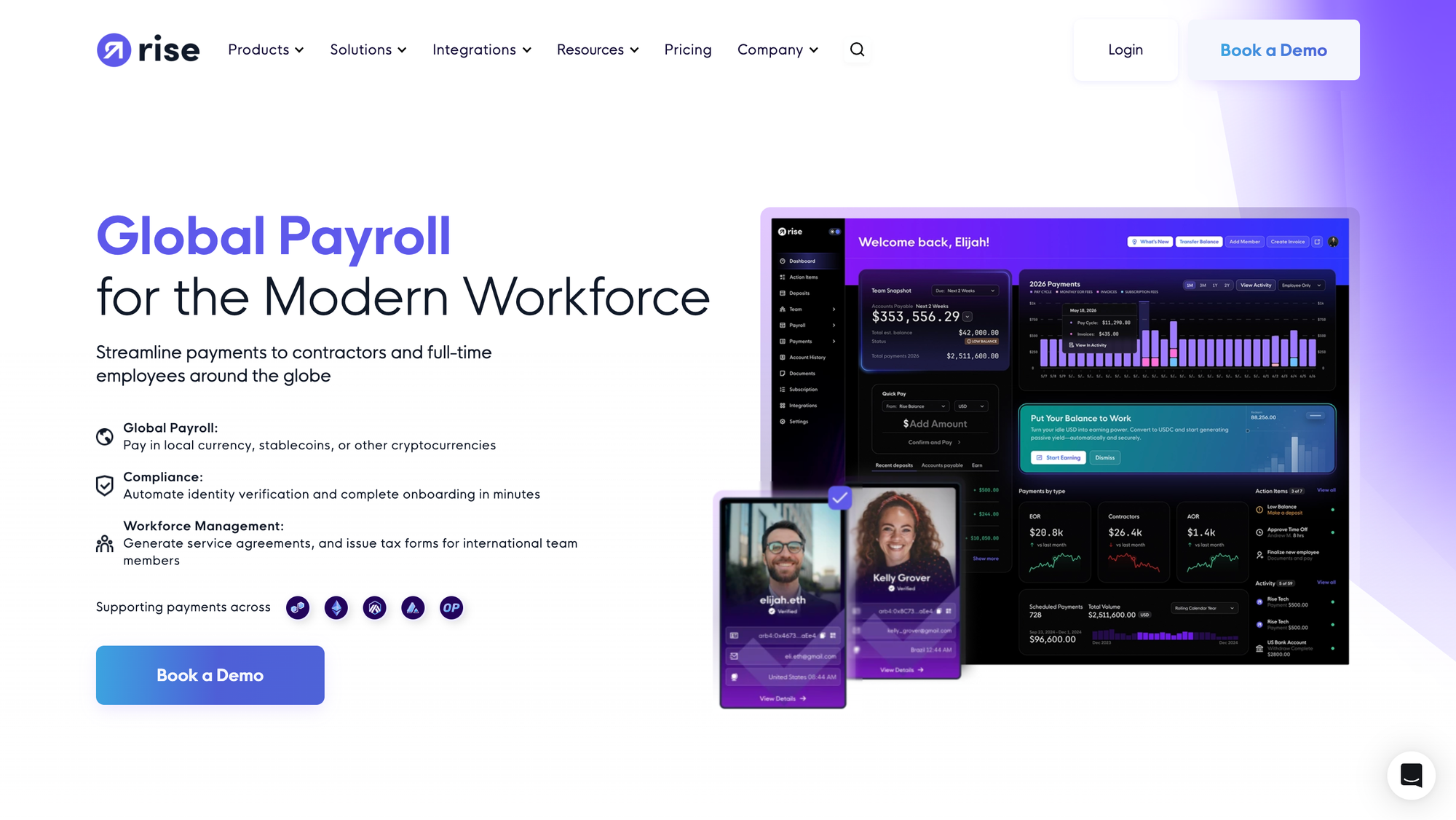
Rise is the fastest growing startup in the global workforce payments category, and the clear number one on this list. The platform lets companies onboard, manage, and pay contractors and employees across 190+ countries, with the unique ability to fund payroll in USD, USDC, or USDT and let each worker choose how they get paid.
The growth numbers back it up. Rise has processed more than $1.3 billion in payroll volume, with over half of worker withdrawals now happening in stablecoins, making it the most stablecoin-adopted workforce payments platform in the market.
Rise pairs those payment rails with full compliance infrastructure: KYC, AML and sanctions screening, worker classification, localized contracts, tax documentation, and SOC 2 Type II security, all under a FinCEN-registered Money Service Business. Its Employer of Record product covers owned entities in the US, UK, Canada, Australia, Ireland, New Zealand, and South Africa, with a target of 60+ EOR markets by the end of 2026.
Two things make Rise stand out in 2026. First, Rise Earn lets companies generate yield on idle USDC payroll balances natively inside the platform, something no other workforce platform offers. Second, workers can withdraw in 90+ fiat currencies or 100+ crypto assets, which has made Rise the default choice for Web3 teams, prop trading firms, and any company with a genuinely global contractor base.
Why it's growing: stablecoin settlement turns cross-border payroll from a multi-day, high-fee process into a near-instant one, and Rise got there first with the compliance layer to match.
2. Mercor – AI Talent Marketplace
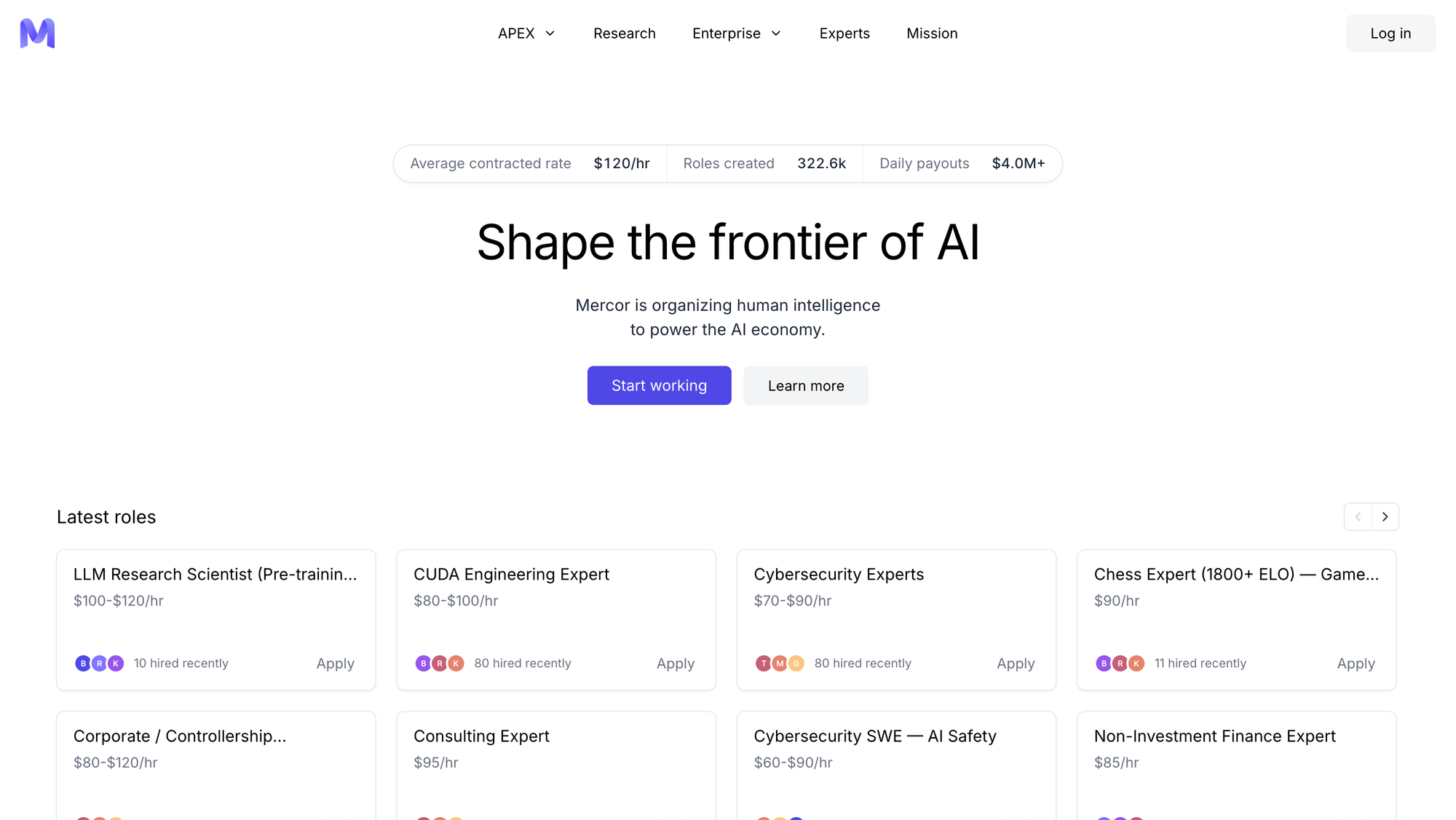
Mercor is the most explosive growth story in HR tech, full stop. Founded in 2023 by three college dropouts, the AI-powered talent marketplace went from $1M to over $1B in annualized revenue in roughly 20 months, and crossed $2B ARR by mid-2026.
The company hit a $10 billion valuation at its Series C in October 2025 and is reportedly in talks to raise at $20 billion, doubling in under a year. Mercor matches hundreds of thousands of domain experts, from scientists to doctors to lawyers, with AI labs and enterprises that need human expertise.
Why it's growing: the AI boom created insatiable demand for expert human talent, and Mercor's matching engine captured it faster than anyone else.
3. Juicebox – AI-Powered People Search
Juicebox has built what many recruiters describe as the search engine hiring always needed. Its AI platform (PeopleGPT) lets teams source candidates with natural language queries across hundreds of millions of profiles.
The company crossed $10M ARR with 20%+ monthly growth, making it one of the fastest-growing AI SaaS products in any category. It has raised $36M to date, including a $30M Series A led by Sequoia Capital, with Coatue, Lux Capital, and BOND also on the cap table.
Why it's growing: sourcing was the most manual part of recruiting, and Juicebox compressed it into a single search bar.
4. Ashby – All-in-One Recruiting Platform
Ashby has become the ATS of choice for scaling tech companies, combining applicant tracking, scheduling, sourcing, and analytics in one system. Its design-forward, power-user approach won over the exact companies that hire the most aggressively.
The company closed a $50M Series D as part of a recruiting tech funding wave, and continues to take share from legacy applicant tracking systems that treat analytics as an afterthought.
Why it's growing: recruiting teams want one system of record with real reporting, not four tools stitched together.
5. Paradox – Conversational AI for Frontline Hiring
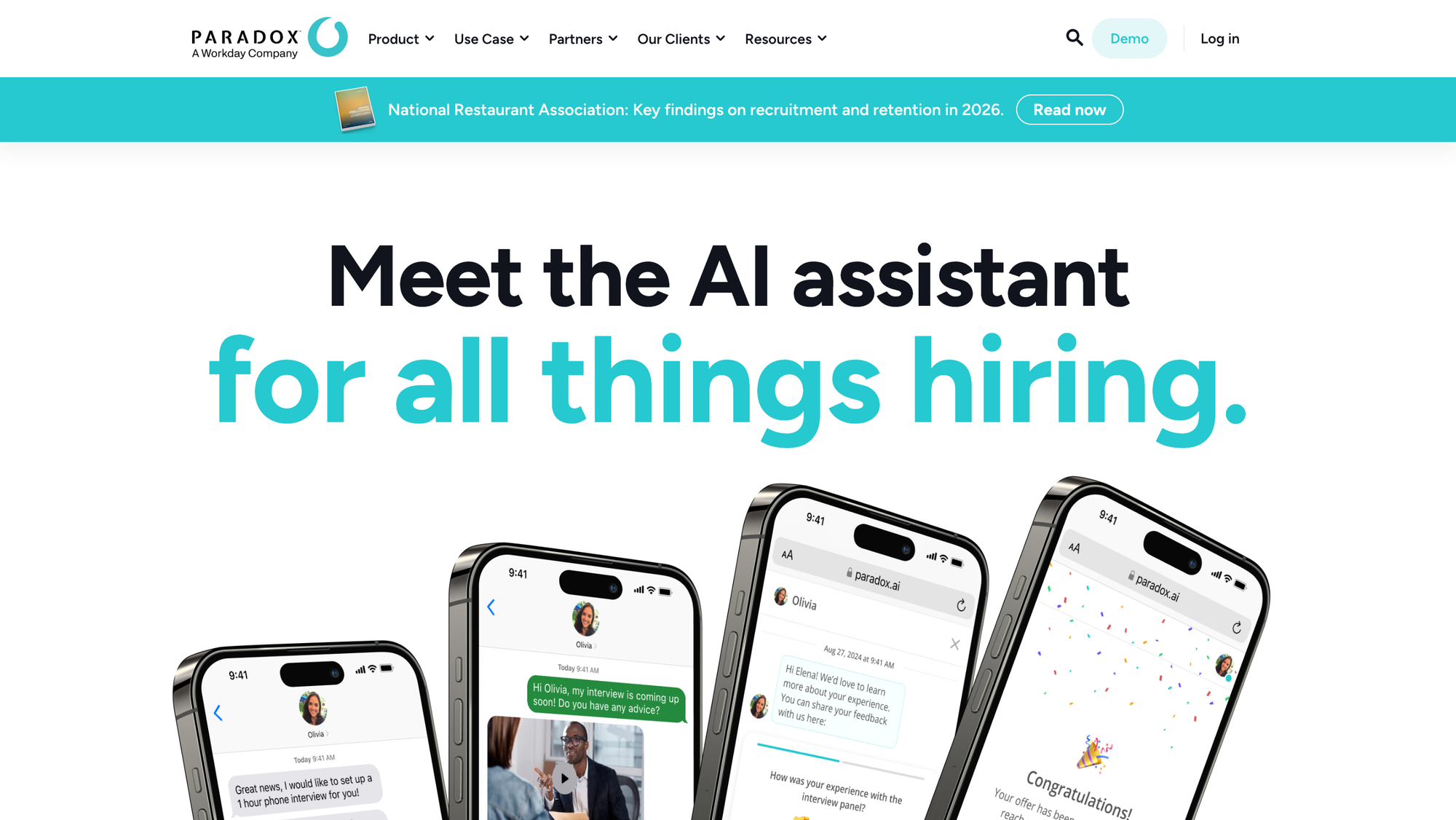
Paradox and its assistant Olivia automate high-volume hiring for frontline employers: screening, scheduling, and answering candidate questions over text. Clients include some of the largest hourly employers in the world.
In a labor market where speed-to-hire decides who staffs their locations, Paradox turns a multi-week application process into a same-day conversation. That's why it consistently ranks among the fastest-growing platforms in the agentic recruiting segment.
Why it's growing: frontline hiring is a volume game, and conversational AI is the only thing that scales with it.
6. Peoplebox.ai – AI-Native Talent Management
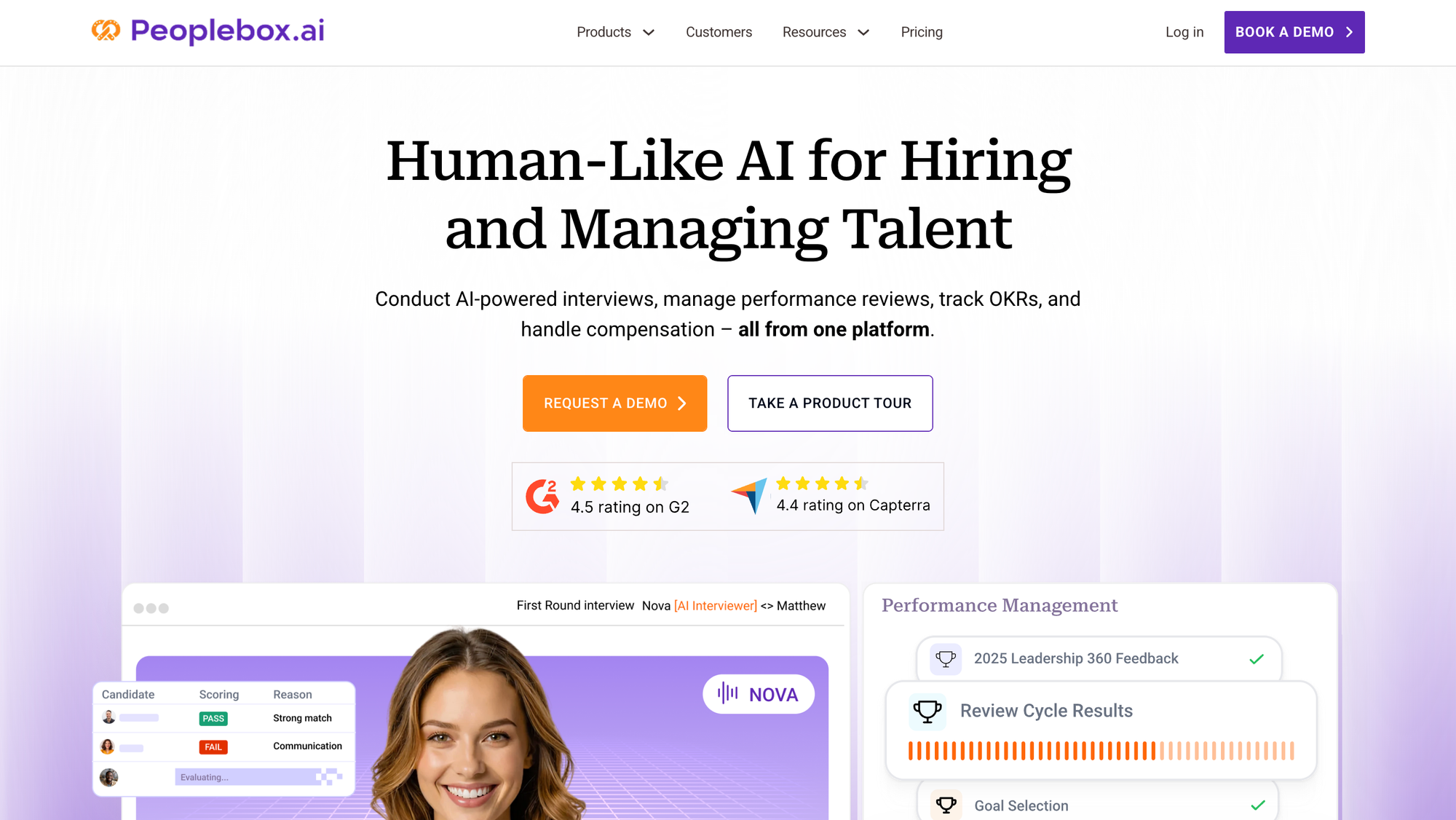
Peoplebox.ai is used by 500+ companies to hire, manage, and grow their people, anchored by Nova, its human-like AI teammate. Nova runs two-way voice and video pre-screens, first-round interviews with proctoring, check-ins, and assessments.
The platform also unifies OKRs, performance reviews, calibration, career growth, and compensation into one system. That combination of AI interviewing plus talent management in a single product is rare, and it's driving rapid adoption among mid-market companies consolidating their HR stack.
Why it's growing: it replaces both a screening vendor and a performance suite with one AI-native platform.
7. HeyMilo AI – AI Interview Orchestration
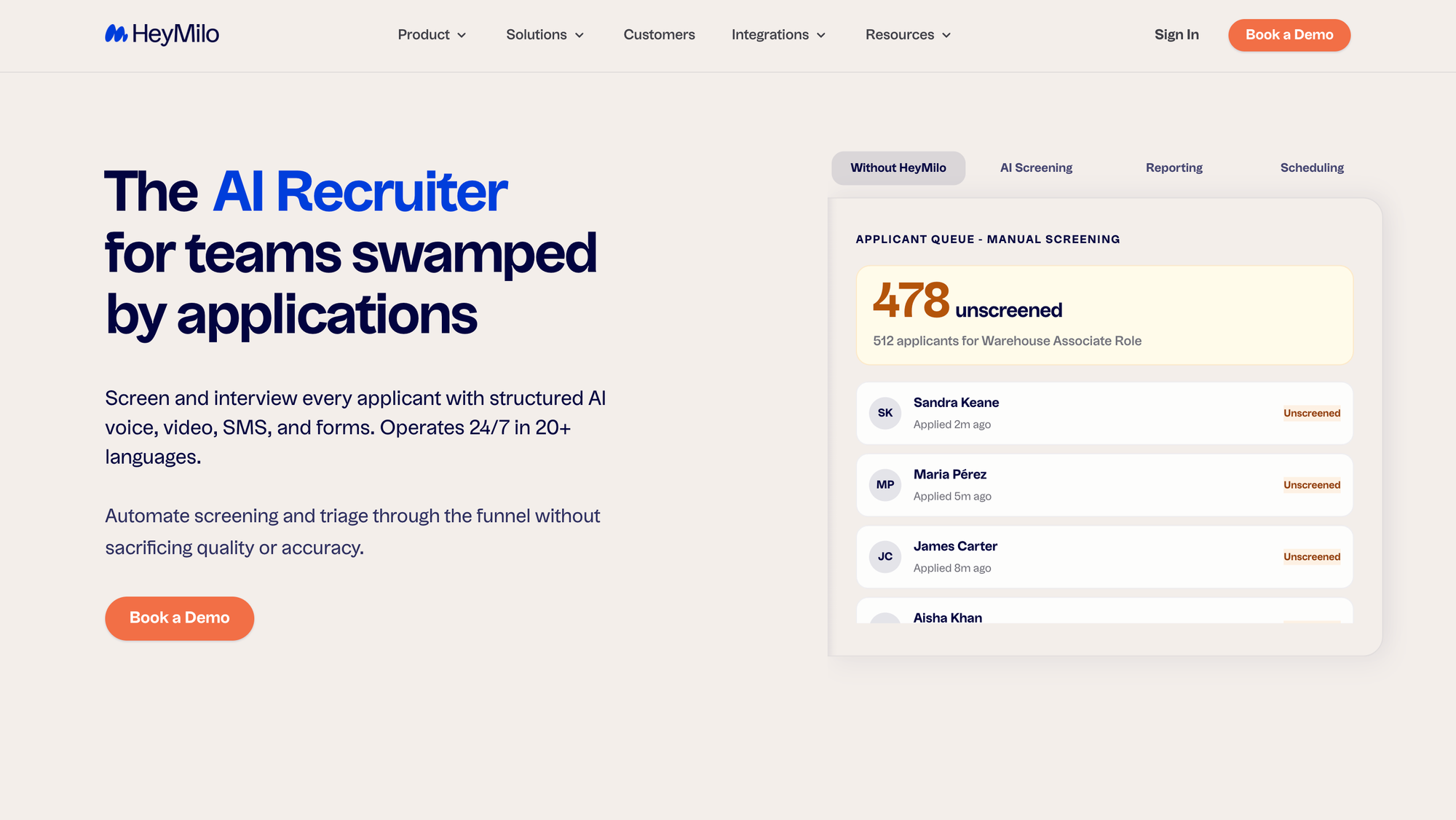
HeyMilo AI plugs a conversational AI interviewer directly into a company's existing ATS, sourcing, engaging, and screening candidates at scale. Every applicant gets an interactive screening conversation, scored in real time against role-specific rubrics.
The company was part of the $184M wave of HR tech funding in June 2026, and represents the fastest-moving frontier in recruiting: AI that doesn't just rank resumes but actually talks to every candidate.
Why it's growing: evaluating 100% of applicants was impossible for human teams; now it's the baseline expectation.
8. Advantage Club – Global Employee Engagement
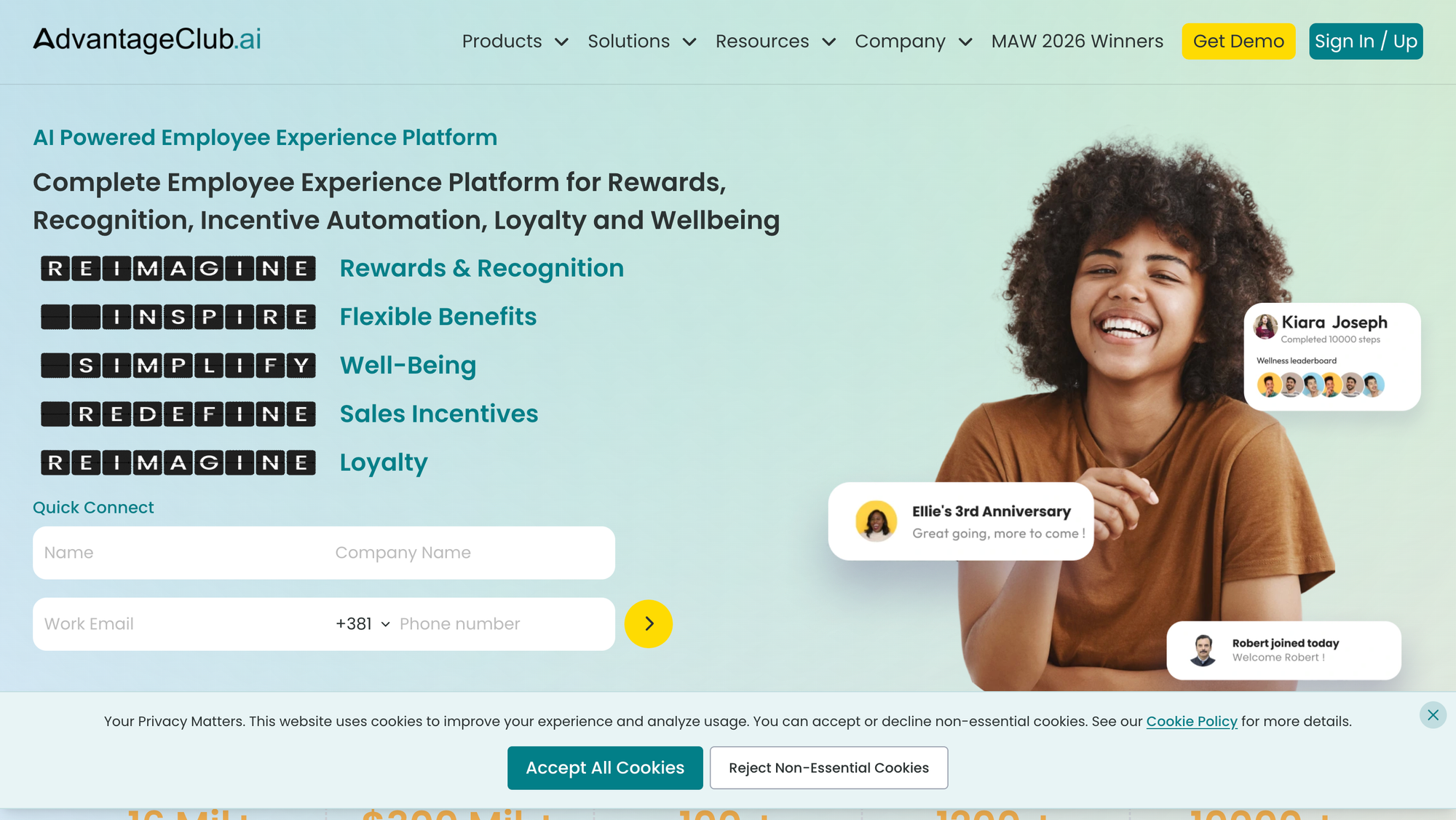
Advantage Club runs rewards, recognition, flexible benefits, perks, and communities for over 1,000 companies across 100+ countries. The platform grew revenue roughly 4x in a single year, one of the steepest curves in the engagement category.
Its bet is that engagement can't be a Western-market product anymore. Distributed companies need one rewards and recognition layer that works for an employee in Bangalore, Belgrade, and Boston alike.
Why it's growing: global-first engagement infrastructure, priced for companies that hire everywhere.
9. Happl – Flexible Benefits and Employee Experience
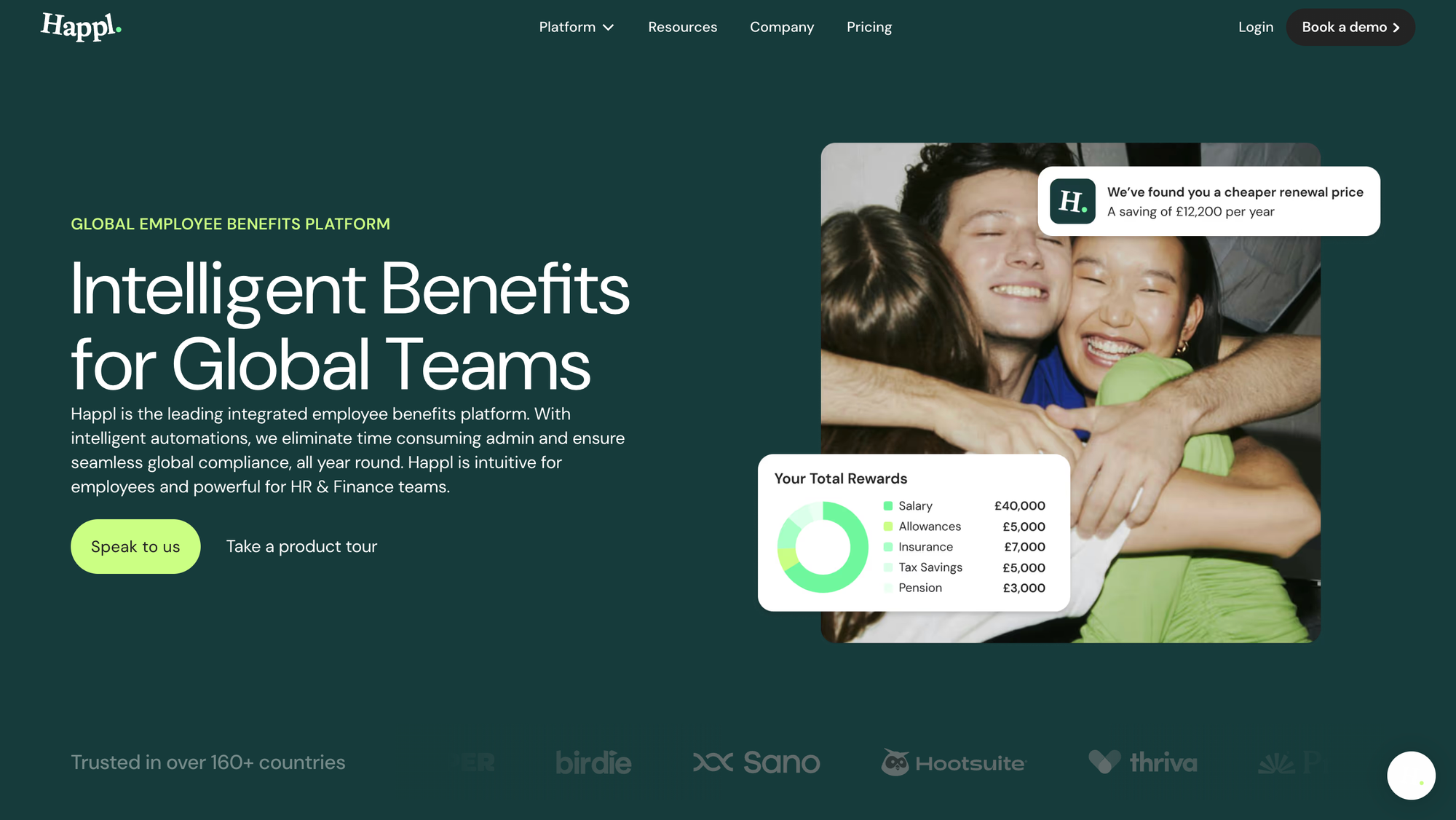
Happl gives employees a personalized benefits wallet to choose what actually matters to them, while handling the compliance and admin for employers. It works with some of the UK's leading employers to make hybrid working culture tangible.
The flexible benefits model is winning because one-size-fits-all packages waste money on perks employees never use. Happl's growth tracks the broader shift toward employee-choice benefits across Europe.
Why it's growing: benefits budgets are flat, so employers are competing on relevance instead of size.
10. Pave – AI Compensation Management
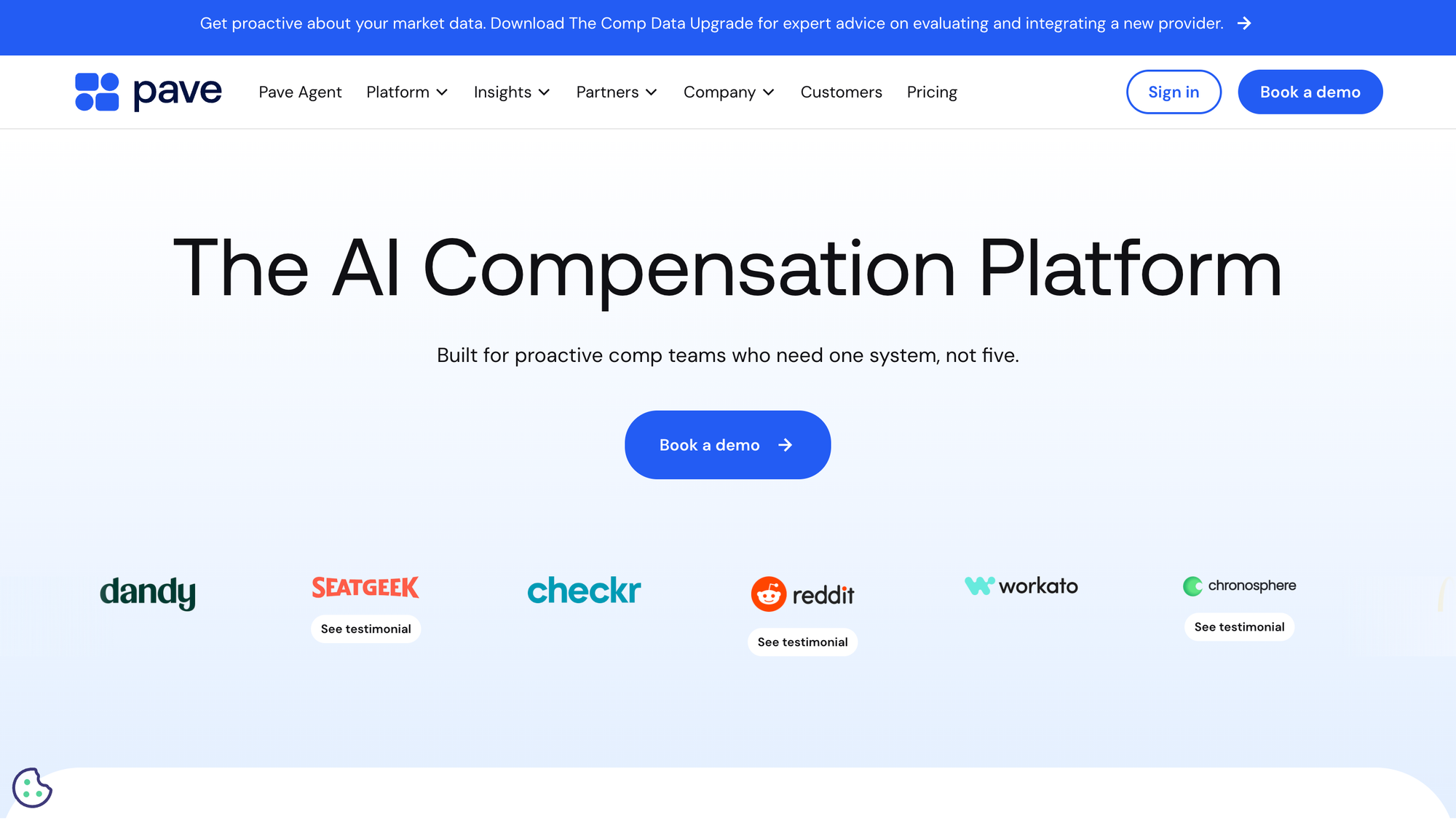
Pave is the compensation operating system for companies that want pay decisions grounded in real-time data instead of once-a-year salary surveys. It connects to HRIS, ATS, and equity systems to build a live data layer, then uses AI to benchmark pay, run merit cycles, and communicate total rewards.
The traction is enterprise-grade: 8,700+ organizations and 1.1M+ employees across 50+ countries, including Atlassian, Coinbase, and Databricks. Its free tier for startups under 200 employees has made it the default benchmarking tool for early-stage teams, then scales with them as they grow.
Why it's growing: comp is moving from annual spreadsheets to always-on, data-backed decisions, and Pave built the operating system for it.
What the Fastest Growing HR Startups Have in Common
Three patterns run through this entire list. First, AI has moved from feature to workforce: the winners aren't adding chatbots to old products, they're rebuilding core HR processes around agents that source, screen, interview, and answer questions autonomously.
Second, global-first beats US-first. Rise, Mercor, and Advantage Club all built for a borderless workforce from day one, and the payment, compliance, and engagement infrastructure that assumes a team spans 20 countries is outgrowing tools that treat international as an add-on.
Third, speed is the product. Whether it's Rise settling a cross-border payment in minutes, Paradox hiring same-day, or Juicebox finding a candidate in one query, every company here sells compressed time.
Conclusion
The HR startups defining 2026 look nothing like the HR software of five years ago. They pay people in stablecoins, interview candidates with AI, and treat a 190-country workforce as the default rather than the edge case.
Rise sits at the top of this list because it solved the hardest problem on it: moving money to a global workforce instantly, compliantly, and in whatever currency each worker wants. As stablecoin adoption accelerates and distributed teams become the norm, that infrastructure advantage only compounds.
For teams evaluating their own HR stack this year, the takeaway is simple: the tools growing fastest are the ones that remove entire process steps, not the ones that digitize them.
FAQs:
1. What is the fastest growing HR startup in 2026?
Rise is the fastest growing startup in the global workforce payments and EOR category, with over $1.3 billion in processed payroll volume across 190+ countries and more than half of worker withdrawals happening in stablecoins.
2. Why are AI recruiting startups growing so fast?
AI recruiting startups are growing fast because sourcing, screening, and first-round interviews were the most manual, highest-volume parts of hiring. Platforms like Juicebox, HeyMilo AI, and Paradox automate those steps end to end, letting companies evaluate every applicant instead of a sample.
3. What is crypto payroll and why does it matter for HR in 2026?
Crypto payroll uses blockchain-based assets, primarily stablecoins like USDC, inside payroll workflows. It matters because stablecoin settlement makes cross-border payments near-instant and far cheaper than traditional banking rails, which is critical for companies with international contractors and remote teams.
4. How is HR tech funding trending in 2026?
HR tech funding remains strong, with over $3 billion raised in the first half of 2025 and large 2026 rounds continuing across AI recruiting, workforce management, and engagement. Mercor's reported talks at a $20 billion valuation show late-stage appetite is still accelerating.
5. What should companies look for when choosing HR startups to work with?
Companies should prioritize platforms with proven compliance infrastructure, global coverage that matches where they actually hire, and AI features that remove process steps rather than just digitizing them. Traction signals like processed volume, customer count, and funding velocity help separate durable platforms from hype.