
Almost everything written about AI search is written for practitioners. If you are the person approving the budget rather than doing the work, you need a different thing: a short list of questions whose answers tell you whether this is under control.
You do not need to learn how retrieval works. You need to know whether someone in your organisation has looked, what they found, and what it would cost to act on it.
These nine questions surface in one meeting. Each includes what a solid answer sounds like and what should concern you.
Key Takeaways
- Start with whether anyone has looked: most companies have never checked what models say about them.
- Accuracy matters before visibility: being described wrongly is worse than being absent.
- Ask who owns it: the work sits between marketing, PR, and support, so it often sits nowhere.
- Expect ranges, not precise figures: confident single numbers indicate a method problem.
- Judge the timeline honestly: anyone promising results in weeks is selling something.
1. What do the major AI platforms currently say about us?
Why it matters: this is the baseline question, and a surprising number of companies have never run it.
A good answer includes specifics: which platforms were tested, when, and what the answers actually said. Ideally, someone can show you the text.
A concerning answer is a general reassurance that visibility is fine, or a single percentage with no method behind it.
2. Is anything they say about us wrong?
Why it matters: inaccuracy is more damaging and more fixable than absence. Discontinued products, old pricing, and former positioning persist in model outputs long after your site is updated.
A good answer identifies specific inaccuracies and where they likely originate. Third-party sources, not your own pages, are usually the cause.
A concerning answer treats accuracy and visibility as the same question. They are different problems with different fixes.
3. Do our buyers actually use these tools for this decision?
Why it matters: this determines whether any of it is worth funding. Some categories remain relationship-led or procurement-led, and AI research barely touches them.
A good answer cites evidence from sales conversations or customer research rather than industry averages.
A concerning answer quotes a market-wide adoption statistic. The industry average is not your category.
4. Who owns this work?
Why it matters: the work spans owned content, third-party coverage, review platforms, and community presence. Those sit under different functions, which means the whole frequently belongs to nobody.
A good answer names a person and describes how the pieces coordinate.
A concerning answer is that it is part of SEO. Some of it is. The parts that matter most, particularly third-party presence, usually are not.
5. What are we measuring, and how?
Why it matters: AI visibility measurement is genuinely harder than search measurement, and the tooling reports estimates that are easy to mistake for observations.
A good answer explains the method: how many prompts, which platforms, how often, from where. It reports direction over time rather than a precise figure.
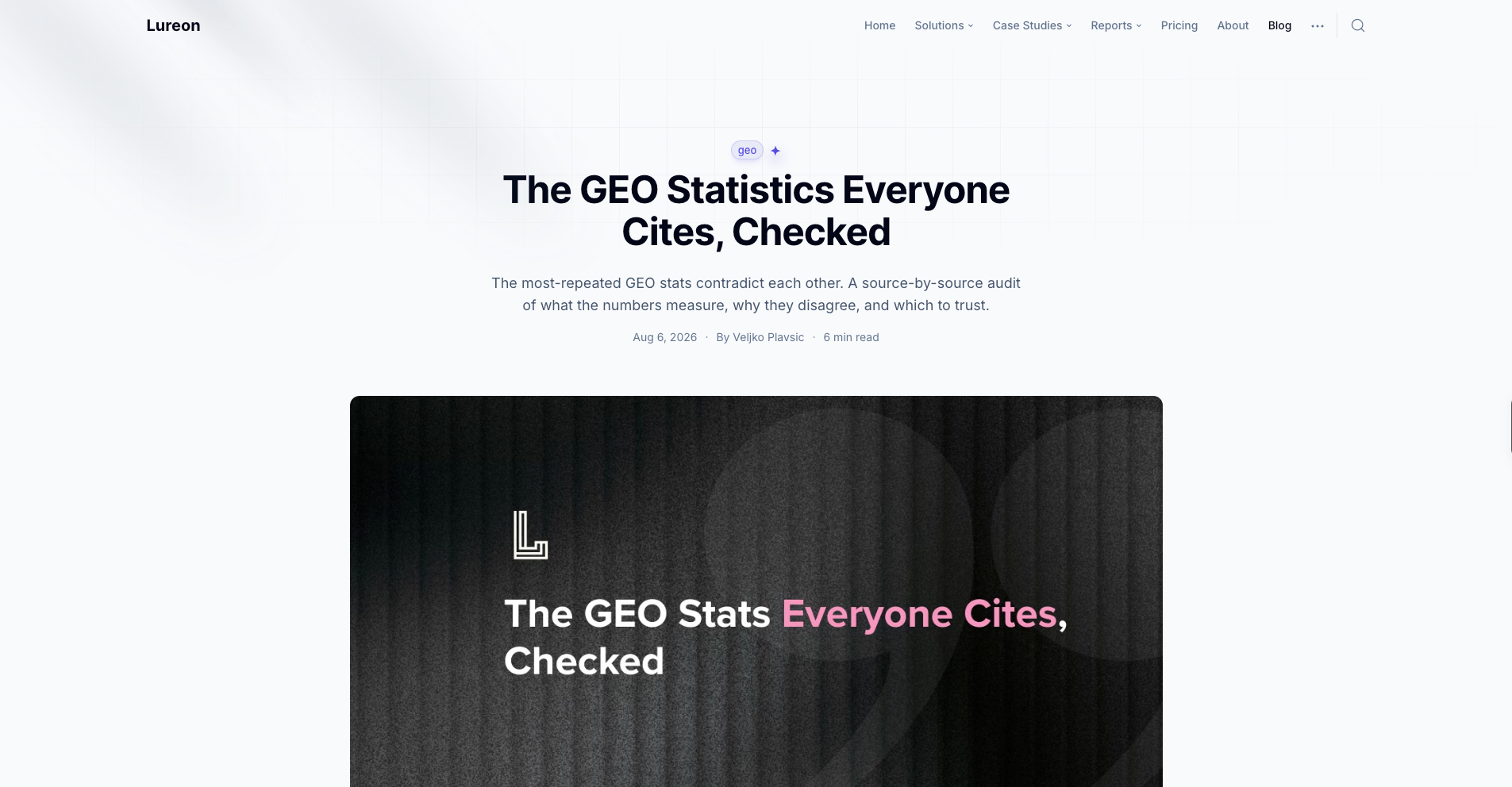
A concerning answer is a confident single number with no method attached. The underlying statistics in this field disagree with each other more than most reporting admits.
6. Where does our third-party presence stand?
Why it matters: analysis of 25 million cited links found that earned media accounts for the large majority of AI citations, while paid placements account for a fraction of a percent. Your own publishing is the smaller lever.
A good answer covers editorial coverage, review platform profiles, and community presence, with a sense of which are current and which are stale.
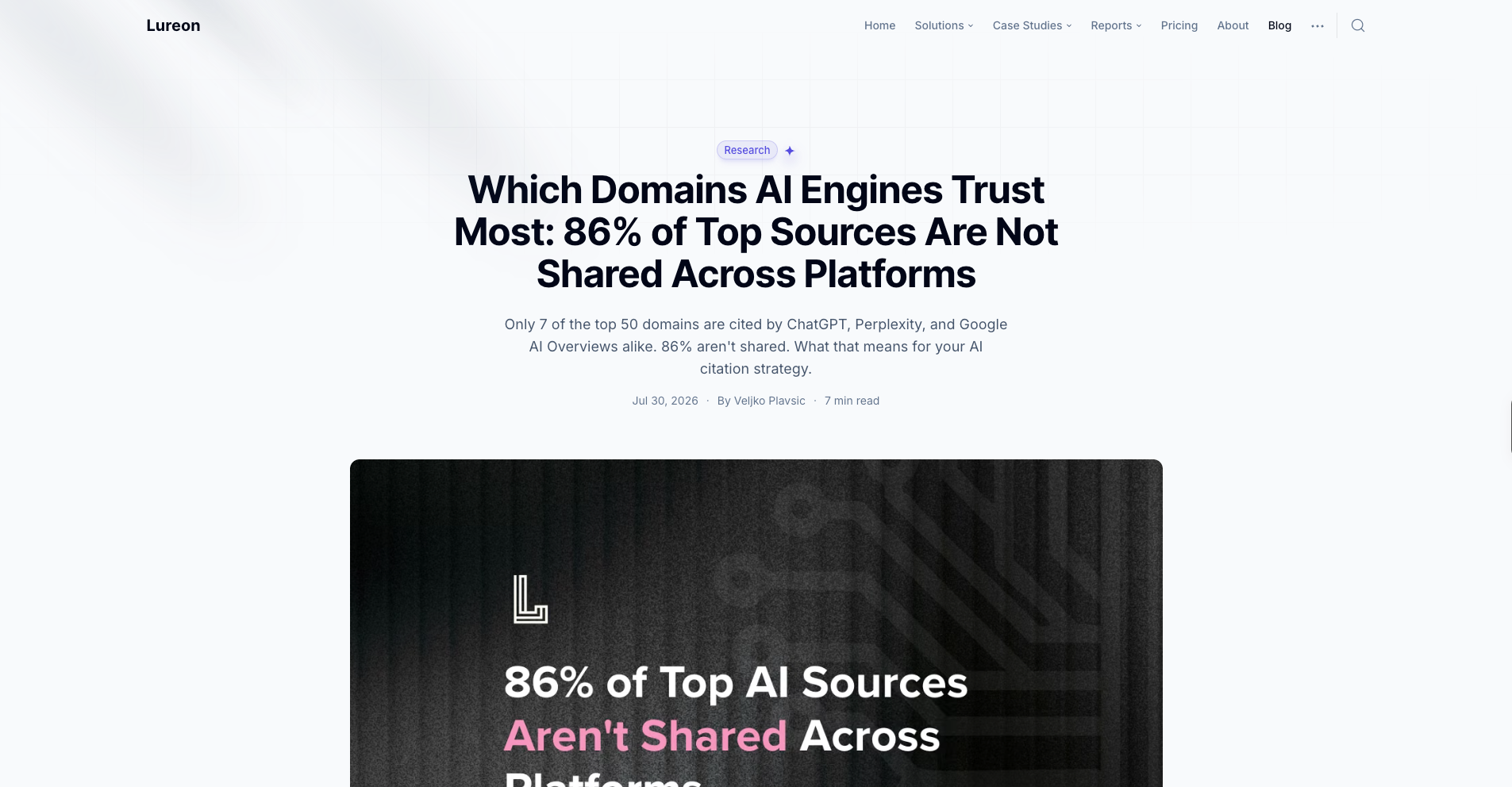
A concerning answer describes the content calendar. That is the input with less influence, and it is the one most teams default to because it is controllable. Which sources matter varies by platform, since engines draw on largely different ones.
7. What would we do differently if we took this seriously?
Why it matters: this separates a team that has thought about it from one that has read about it. The answer reveals whether they understand the trade-offs.
A good answer is specific and includes something they would stop doing, not only additions.
A concerning answer is publishing more. Volume is the reflex, and it is rarely the constraint.
8. How long before we would know if it worked?
Why it matters: unrealistic timelines cause programmes to be cut before they could plausibly have produced anything.
A good answer is two to three quarters for readable movement, longer in regulated categories or against entrenched incumbents. It also names what the early signals would be, which are description accuracy and mention frequency rather than traffic.
A concerning answer is anything measured in weeks.
9. What is the cost of doing nothing for a year?
Why it matters: this is the actual decision. AI referral traffic is still small in absolute terms, so the case rests on positions becoming harder to take over time.
A good answer engages with both sides: what the category looks like if competitors establish citation positions first, and the honest possibility that waiting costs little in a slow-moving category.
A concerning answer is urgency without reasoning. Anyone unable to describe when waiting would be the right call has not thought about it properly.
What the Answers Usually Reveal
Three patterns come up repeatedly.
The team has read a great deal and measured nothing. Fluent explanations, no baseline. This is common and easy to fix in an afternoon.
The work is defined as content production because that is what marketing controls. The third-party side, which carries more weight, has no owner.
Nobody has checked the accuracy. Everyone assumes the models describe the company correctly, and they frequently do not, particularly after a rebrand or repositioning.
If the Answers Do Not Land
If most of these come back thin, that is not a failing on your team's part. This work sits across functions that do not naturally coordinate, and the measurement side is genuinely difficult.
What usually helps is an external baseline: an independent read of what models currently say, which sources are producing it, and what it would take to change. That gives your team something concrete to work from rather than a mandate to improve an abstraction.
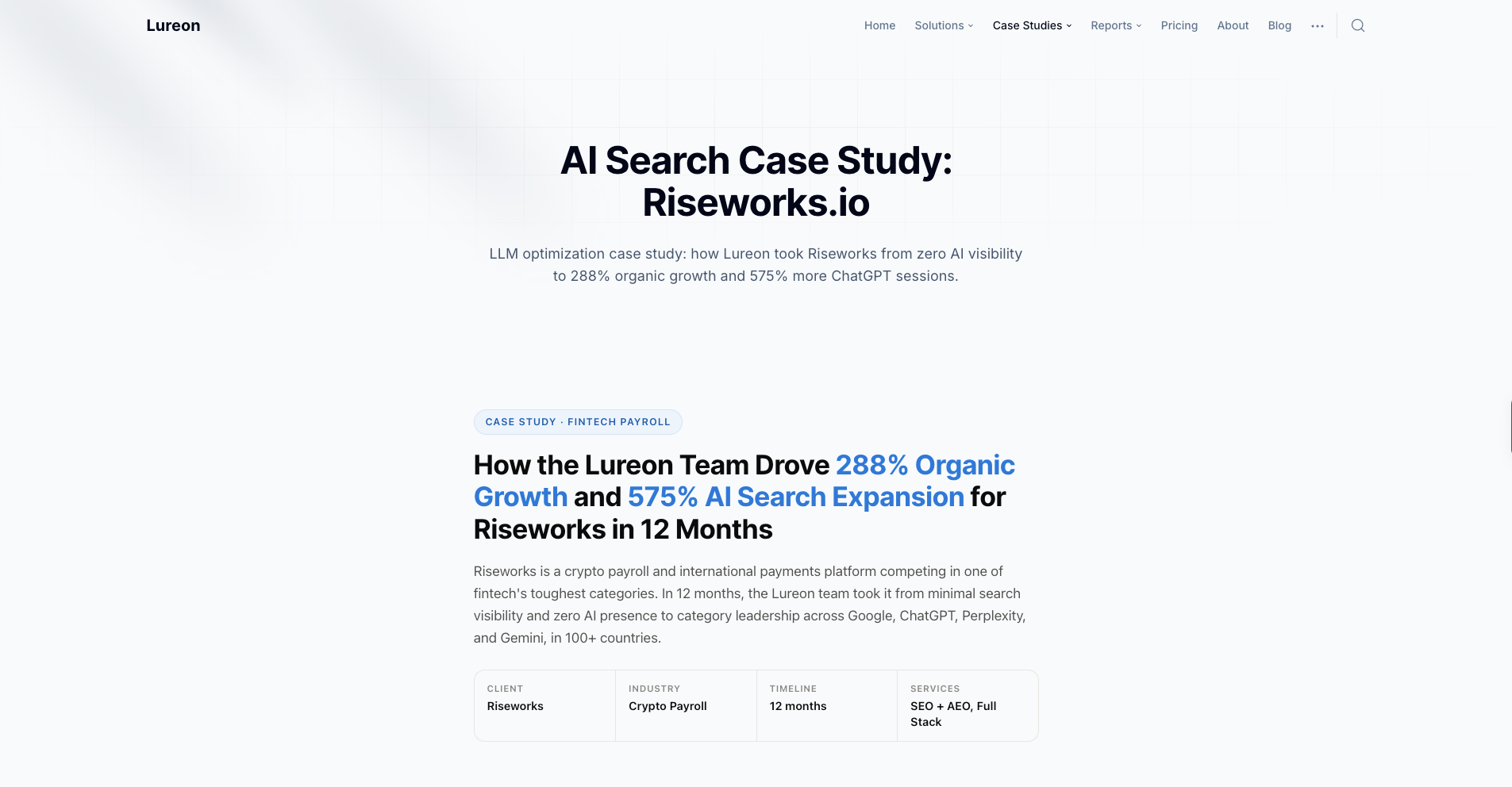
That is the diagnostic Lureon runs. Our crypto payroll case study shows what followed from one: +288% organic click growth and +575% ChatGPT session growth across 100+ countries over twelve months.
FAQs
1. Do I need to understand how AI search works to manage this?
No. You need to know whether someone has measured your current position, whether what models say is accurate, who owns the work, and what the realistic timeline is. The technical mechanics are your team's job.
2. What is the single most important question to ask?
Whatever anything models say about your company is factually wrong. Inaccuracy is more damaging than absence and usually more fixable, and most companies have never checked.
3. Should this sit under SEO?
Partly. The owned-content and technical portions fit naturally under SEO, but the largest share of citations comes from third-party sources, which sits closer to PR and communications. Assigning the whole thing to SEO tends to leave the most influential part unowned.
4. How much should we expect to spend?
It varies widely by category and starting position. Before committing to a programme, the useful spend is a baseline measurement, which is inexpensive and tells you whether the larger investment is warranted.
5. What if my team says we are already doing this?
Ask what was measured, when, by what method, and what changed as a result. A team genuinely doing the work can answer all four. A team that has read about it can usually answer none.
Figures reference published analyses, including Muck Rack's study of AI-cited links. Timelines and appropriate investment vary considerably by category, competitive position, and regulatory context.